





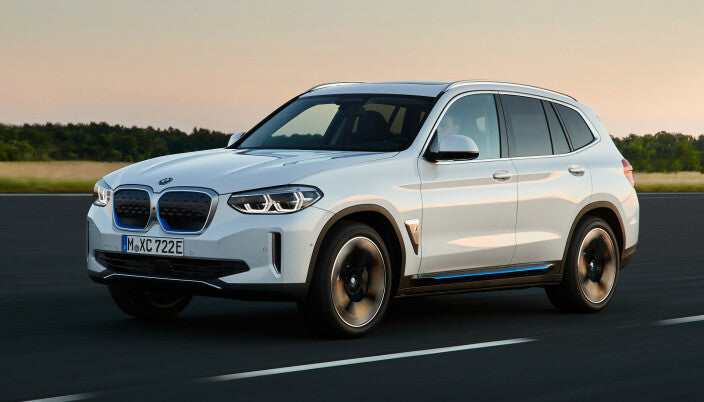
Strong Early Demand for BMW’s Neue Klasse SUV
BMW’s latest electric SUV, the BMW iX3, is attracting considerable attention even before most buyers have had the chance to see it in person. According to figures shared during the company’s recent annual conference, the vehicle has already accumulated more than 50,000 confirmed orders across Europe.
The model represents the first production vehicle built on BMW’s new Neue Klasse electric platform. Although the SUV was first revealed in September, customer deliveries have only just started. Despite the limited availability of demonstrator vehicles at dealerships, orders have continued to grow rapidly.
For BMW, the early demand signals strong interest in the brand’s next generation of electric vehicles.

Orders Placed Without Traditional Test Drives
One unusual aspect of the iX3’s launch is that many customers committed to the vehicle before experiencing it firsthand. Because production only began in late October 2025, showrooms initially had no test units available.
Even so, buyers proceeded with orders that included scheduled delivery dates, rather than refundable reservations. This suggests a high level of confidence among customers already familiar with BMW’s design and technology direction.
Company leadership has previously acknowledged that interest in the vehicle exceeded internal forecasts. Oliver Zipse stated earlier that the level of demand was significantly stronger than anticipated.
The surge in orders prompted BMW to increase production capacity sooner than originally planned.
Production Expansion at BMW’s New Hungarian Plant
Manufacturing of the iX3 takes place at a recently constructed facility in Debrecen, Hungary. To keep pace with the incoming orders, BMW added an additional production shift earlier than scheduled.
When fully operational, the plant is designed to produce up to 150,000 electric vehicles annually. However, ramping up output ahead of schedule presents logistical challenges, especially for a new production line introducing unfamiliar technologies and supply chains.
The Debrecen factory also represents a key step in BMW’s long-term electrification strategy. The site was specifically built to support the Neue Klasse platform, which will underpin several future EV models.
One Variant Already Capturing a Large Market Share
Despite currently being offered in just a single configuration, the iX3 is already making a noticeable impact in Europe’s electric vehicle segment.
The available model—the iX3 50 xDrive—accounts for approximately one-third of BMW’s electric vehicle sales in the region. Achieving that share with only one version highlights how strongly the market has responded to the new SUV.
Additional options are already in development. BMW plans to introduce a more affordable iX3 40 variant before the end of the year. That version is expected to offer both single-motor and dual-motor drivetrain options, giving buyers more flexibility in terms of performance and price.
The company’s experience suggests that customers are willing to adopt new electric models when they combine strong driving range, high charging speeds, and familiar SUV practicality.
Key Specifications Aim to Compete in a Crowded Segment
The iX3’s technical specifications place it among the more capable electric SUVs in its class.
For the American market, the 2027 model-year version is expected to deliver approximately 400 miles of EPA-rated driving range. Charging performance is also a major selling point. BMW states that the vehicle supports up to 400 kilowatts of peak charging power, allowing the battery to recharge from 10% to 80% in roughly 21 minutes under optimal conditions.
Pricing is projected to start at around $60,000 in the United States. That positioning places the iX3 in the middle of a competitive segment that includes several established EVs.
Potential rivals include the Tesla Model Y, Hyundai Ioniq 5, and Chevrolet Blazer EV. Upcoming models such as the Rivian R2 and the Volvo EX60 are also expected to target a similar group of buyers.
With these competitors entering the market, the iX3 will need to maintain its early momentum.
U.S. Launch Plans and Future Production
BMW intends to introduce the iX3 in the United States during the summer sales season. Initial units sold in North America will be imported from the Hungarian factory where the vehicle is currently produced.
However, BMW has longer-term plans to expand production closer to its North American customers. The automaker is preparing to assemble vehicles for the region at its manufacturing facility in San Luis Potosí, Mexico, starting next year.
Local production could help streamline logistics, reduce shipping costs, and potentially increase supply for the growing U.S. EV market.

A Promising Start for BMW’s New Electric Platform
The early performance of the iX3 suggests that BMW’s next-generation EV architecture may be arriving at the right time.
Strong order numbers—over 50,000 vehicles before widespread test drives—indicate that customers are receptive to the company’s latest design direction and technology strategy.
As additional variants join the lineup and global deliveries expand, the iX3 will provide an important test of whether BMW’s Neue Klasse platform can compete effectively against both established EV leaders and the next wave of electric SUVs.
For now, the model’s initial reception demonstrates that a well-positioned electric vehicle with strong range and charging capabilities can still generate substantial demand, even in an increasingly crowded market.
Recommend Reading: When Will the 2027 BMW i3 Electric 3 Series Arrive?









Share:
Why Volvo Is Ending the EX30’s Short Run in the U.S.
Lucid Cosmos vs Rivian R2: charging speed and efficiency compared