




General Motors has recorded a $7.1 billion charge tied to a major reassessment of its electric vehicle strategy, underscoring how quickly the economics of EV investment have shifted in the U.S. market. The move reflects broader industry headwinds as federal incentives fade and regulatory pressure eases, forcing automakers to recalibrate ambitious electrification plans made earlier this decade.
According to a filing with the U.S. Securities and Exchange Commission, the charge was booked in the fourth quarter and stems largely from GM’s decision to scale back EV capacity and related investments, particularly in North America.

The Cost of Pulling Back on EV Expansion
Of the total $7.1 billion impact, approximately $6 billion is linked to North American operations, where GM has slowed its EV rollout in response to weakening demand. An additional $1.1 billion relates to the restructuring of GM’s China joint venture, SAIC-GM.
The North American charge includes $1.8 billion in non-cash write-downs and $4.2 billion in cash-related costs, such as contract termination fees and supplier adjustments. These expenses highlight how capital-intensive EV investments can become liabilities when market conditions change.
GM had already taken a $1.6 billion charge earlier in the year tied to softer EV sales, making the latest disclosure part of a broader, ongoing reset rather than a one-time correction.
Policy Changes Alter the EV Market Equation
GM pointed directly to shifting policy signals as a key driver behind its decision. The company cited the expiration of federal consumer EV tax incentives and the loosening of emissions regulations, both of which reduced urgency for buyers and manufacturers alike.
“With the termination of certain consumer tax incentives and the reduction in the stringency of emissions regulations, industry-wide consumer demand for EVs in North America began to slow in 2025,” GM said in its filing.
Without the $7,500 federal EV tax credit, price-sensitive buyers have pulled back, particularly in higher-priced segments. At the same time, changes to Corporate Average Fuel Economy (CAFE) rules removed financial penalties for automakers that fall short of efficiency targets, reducing regulatory pressure to push EV volumes aggressively.
Factory and Battery Plans Reworked
As part of the reset, GM has taken concrete steps to realign its manufacturing footprint. Most notably, the company pivoted its Orion Assembly plant in Michigan away from EV production and back toward full-size SUVs and pickup trucks powered by internal combustion engines.
GM said the decision reflects stronger-than-expected demand for gas-powered trucks and SUVs, a segment where the company continues to post healthy margins.
On the battery side, GM also reduced planned cell capacity by selling its stake in the Ultium Cells facility in Lansing, Michigan to LG Energy Solution. The move lowers near-term capital exposure while allowing GM to retain access to battery supply through partnerships rather than direct ownership.
Industry-Wide Retrenchment, Not an Isolated Case
GM’s move mirrors similar actions across the auto industry. Ford recently announced its own sweeping EV strategy overhaul, projecting more than $19 billion in profit impacts tied to canceled or delayed EV programs, including the discontinuation of the F-150 Lightning.
These shifts suggest the industry is entering a more cautious phase of EV adoption, prioritizing profitability and demand alignment over rapid scale. After years of aggressive investment fueled by regulatory support and optimistic forecasts, automakers are now adjusting to a more uncertain landscape.
GM Maintains Confidence in Its Current EV Lineup
Despite the financial hit, GM emphasized that its existing EV portfolio remains intact. The company currently offers around a dozen electric models across Chevrolet, GMC, and Cadillac, making it one of the most diverse EV lineups in the U.S. market.
“Our strategic realignment of EV capacity does not impact today’s retail portfolio of Chevrolet, GMC and Cadillac EVs in production,” GM said. “We plan to continue to make these models available to consumers.”
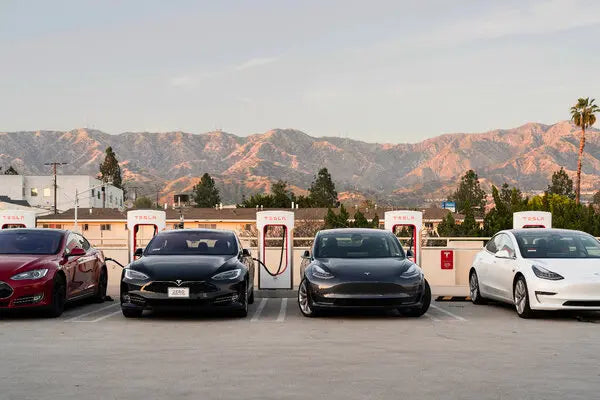
GM was the second-largest EV seller in the U.S. last year, trailing only Tesla, and continues to view electrification as a long-term priority—albeit one now paced more cautiously.

A Reset, Not a Retreat
GM’s $7.1 billion charge illustrates the high cost of pivoting in a rapidly changing policy and market environment. While the company is pulling back on some EV investments, it is not abandoning electrification altogether. Instead, GM appears to be resetting timelines, reallocating capital, and focusing on near-term profitability, while keeping its EV options open for a future rebound in demand.
Recommend Reading: GM’s EV Sales Soared in 2025, Then Hit a Sharp Reality Check
Aktie:
Kia EV2 Debuts as a New Entry-Level Electric Crossover for Europe