





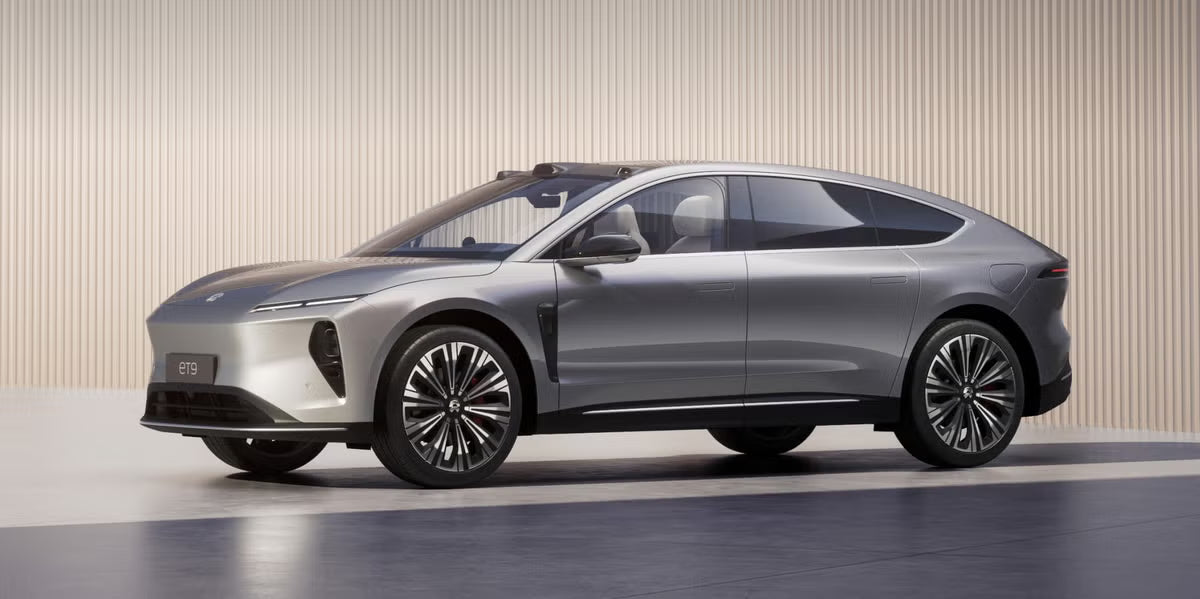
China’s electric vehicle market is rapidly maturing. With dozens of automakers competing for attention, the next few years will likely see consolidation, brand exits, or government-driven reorganizations. Amid this crowded landscape, some companies are betting that exceptional user experience, not just technology, will determine success.

Experience Over Hardware
Nio, known for its battery-swapping technology, showcased this strategy at CES 2026 with the ET9 Horizon Edition, its most expensive model yet. The car featured a Dolby Atmos 3D sound system and advanced predictive suspension. Ted Li, head of Nio product experience, explained that the company focuses on holistic experiences rather than just selling cars.
“The core of our journey is creating a complete experience, not merely producing a vehicle,” Li said. This mindset drives both design and customer engagement, from in-car technology to lifestyle touchpoints.
The ET9: A “5D” Experience
The ET9 stands out for more than performance specs. Its predictive suspension absorbs bumps with uncanny smoothness, while an optional “5D experience” moves the car in sync with visual content on the infotainment screen. Combined with Dolby Atmos audio, Nio positions the ET9 as a luxury amusement-park-like ride with premium finishes like massaging seats and tufted leather.
This approach highlights how experience can differentiate brands in a market where basic EV specs—range, charging, and acceleration—are increasingly similar.
Competition Beyond China
Chinese automakers face both domestic and international rivals. The ET9 competes with vehicles like the Huawei-backed Maextro S800 and BYD’s Yangwang U7, while smaller EVs and PHEVs from Zeekr, Xpeng, and Xiaomi continue to gain traction.
Executives acknowledge that in China, battery technology, fast charging, and range are already meeting consumer expectations. With these basics largely standardized, companies are seeking new ways to engage customers, from branding to lifestyle integration.
Nio Houses: Building a Lifestyle Brand
Part of this strategy is Nio’s Nio House concept. These owner experience centers blend café spaces, co-working areas, and children’s play zones, offering white-glove service beyond traditional car sales. While tech brands like Xiaomi or Huawei focus on stores and gadgets, Nio creates an environment where the brand becomes part of daily life.
This strategy has also influenced product launches. The all-new ES8 large crossover saw price adjustments and additional standard equipment to attract buyers, while Firefly, a smaller premium model, extends the lifestyle branding to a more accessible segment.
Challenges in Global Expansion
Despite its innovative approach, Nio’s European presence remains limited. High prices and competition from established brands like Audi and BMW have slowed adoption. Even with Nio Houses in select cities, the experience alone has not been enough to drive widespread sales.
Profitability also remains a concern. The company has struggled with stock price volatility and narrow margins, highlighting that creating a premium experience does not automatically translate into financial success.

The Broader Implication for Chinese EVs
What Nio demonstrates is the sophistication of the Chinese EV sector. Consumers are generally satisfied with current EV capabilities, pushing brands to innovate in ways that go beyond technical specifications. In this context, companies are selling lifestyle and experience as much as cars.
Meanwhile, in markets like the U.S., automakers are still focused on basic EV adoption challenges, such as range anxiety and charging infrastructure. China’s EV industry illustrates a future where differentiation is achieved through brand experience rather than solely through performance metrics.
Recommend Reading: What Geely Could Bring to the U.S. Market









Share:
Chevrolet Plans to End 2027 Bolt Production After Limited Run
Volkswagen Tops Tesla as Europe’s Leading EV Brand in 2025