



Ford Cancels Multiple EVs

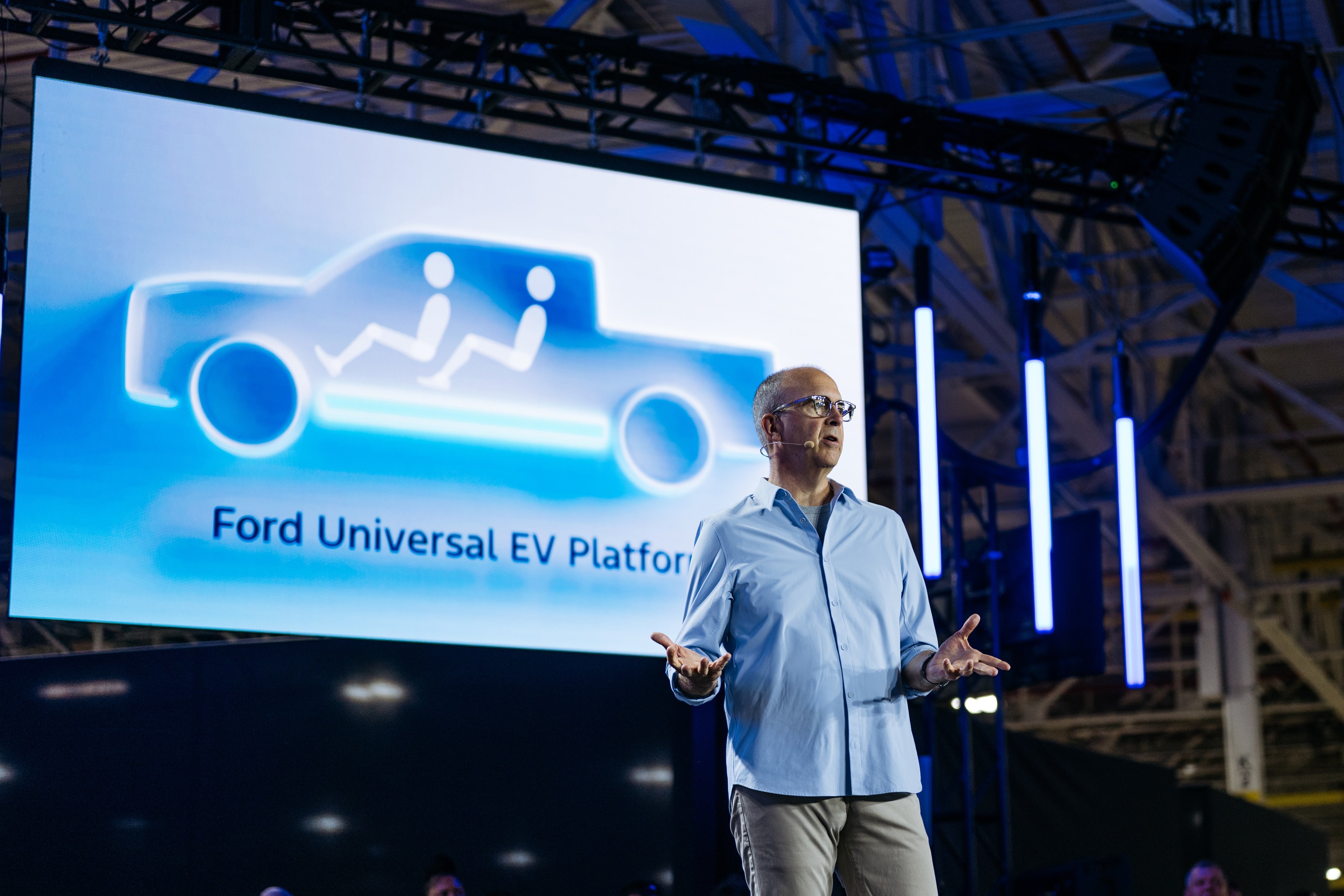
Ford has been scaling back its electric vehicle plans, canceling several anticipated models including a three-row electric SUV, an F-150 Lightning successor, and an E-Transit replacement. While the company is not abandoning EVs entirely, its efforts are now focused on an all-new Universal Electric Vehicle (UEV) platform. This architecture, developed by Ford’s "skunkworks" team, is designed to underpin affordable EVs in the U.S., including a roughly $30,000 electric pickup.

Ford F-150


Europe Launch Still Uncertain

Despite being called “universal,” the UEV platform may not reach Europe. Ford Europe President Jim Baumbick described bringing the platform across the Atlantic as a “very significant undertaking in terms of engineering and capital intensity.” Pickups are far less popular in Europe than in the U.S., raising questions about the viability of launching the platform there.


Compact EVs Could Follow

The UEV platform is expected to support not only pickups but also compact SUVs and other EV models. Yet Ford has not confirmed if any of these models will reach the European market. CEO Jim Farley emphasized caution, noting that the company “has not landed the plane yet” and wants to focus on the U.S. launch first.


Reliance on Partners

Ford’s European strategy currently depends on rebadged and partner-built EVs. The company already sells MEB-based Volkswagen models and recently partnered with Renault for affordable EVs in Europe. However, the slow sales of the VW-built Explorer EV and Capri EV show the challenges of relying on external platforms. Buyers often prefer products built by the brand itself, leaving Ford at a disadvantage.

Ford Partners With Renault To Develop Low-Cost EVs for Europe


Regulatory Pressure Remains

EVs are crucial to Ford’s long-term European strategy. Despite rolling back its EV mandate in the U.S., European regulators still require drastic emission reductions by 2035, essentially mandating a strong EV lineup. Farley has warned that Chinese newcomers are rapidly gaining market share, a trend already visible in Europe. Without competitive EV offerings, Ford risks further decline in the region.


A Strategic Crossroads

Ford’s cautious approach highlights a critical inflection point. While the UEV platform could redefine its EV portfolio, the company is balancing profitable U.S. gas-truck sales with its shrinking European presence. Historically dominant in Europe, Ford is now struggling to maintain relevance. Partnerships like Renault may help, but the underlying challenge remains: consumers tend to favor local EVs over rebadged imports, leaving Ford’s European ambitions uncertain.

Recommend Reading: Ford Scales Back EV Ambitions at a Cost of Nearly $20 Billion

Leave a comment

Please note, comments need to be approved before they are published.

This site is protected by hCaptcha and the hCaptcha Privacy Policy and Terms of Service apply.

FAQs - Chinese Electric Vehicles for U.S. EV Users

What is Ford BlueCruise and how does it work?

Ford BlueCruise is Ford’s hands-free driving technology, available on select highways in North America known as Blue Zones. It uses a combination of adaptive cruise control, lane centering, GPS mapping, and driver-facing cameras to allow hands-free driving while ensuring the driver stays attentive.

Which Ford and Lincoln vehicles come with BlueCruise?

As of 2025, BlueCruise is available on popular models such as the Ford Mustang Mach-E, F-150 Lightning, F-150, Expedition, and Lincoln Navigator, Aviator, and Corsair. Ford plans to expand BlueCruise availability across more EVs and traditional vehicles in the coming years.

How much does Ford BlueCruise cost?

BlueCruise typically comes with a trial period (90 days to 3 years depending on the model) and requires a subscription afterward. Pricing starts around $800 per year or $75 per month, though packages vary by vehicle and dealer promotions.

What are Ford BlueCruise Blue Zones?

Blue Zones are pre-mapped divided highways where BlueCruise has been validated for hands-free driving. As of 2025, Blue Zones cover over 200,000 miles of highways in the U.S. and Canada, with Ford expanding coverage via over-the-air updates.

Is Ford BlueCruise the same as Tesla Autopilot or GM Super Cruise?

No. While all are advanced driver-assistance systems (ADAS), each works differently. Tesla Autopilot relies on camera-based vision AI, GM Super Cruise uses LiDAR-based HD maps, and Ford BlueCruise combines adaptive cruise control, lane centering, and driver monitoring. BlueCruise is designed for practical, safe highway driving rather than full autonomy.

Does Ford BlueCruise work in bad weather or heavy traffic?

BlueCruise can operate in rain, fog, and stop-and-go traffic, but performance may be limited in severe weather conditions such as snowstorms or when lane markings are not visible. The system always requires the driver to remain attentive and ready to take over.

Can Ford BlueCruise be updated with new features?

Yes. BlueCruise is designed with over-the-air (OTA) update capability, meaning Ford can release new features, expand Blue Zones, and improve system performance without requiring a dealership visit. This makes BlueCruise future-proof compared to traditional ADAS systems.

Does Ford BlueCruise make a vehicle fully self-driving?

No. Ford BlueCruise is classified as a Level 2 autonomous driving system under SAE standards. This means it offers hands-free capability under specific conditions, but the driver must remain alert and keep eyes on the road at all times.

What are the safety features of Ford BlueCruise?

BlueCruise uses infrared driver-facing cameras to ensure the driver’s eyes remain on the road. If the driver looks away too long, the system issues warnings and will gradually slow down the vehicle if no response is detected. This makes it safer than systems that allow driver inattention.

What is the future of Ford BlueCruise technology?

Ford plans to continue expanding BlueCruise with more mapped roads, improved lane-change automation, and integration with EV platforms such as the Mustang Mach-E and F-150 Lightning. By 2030, Ford aims to make BlueCruise a cornerstone of its connected vehicle ecosystem, competing directly with Tesla FSD and GM Super Cruise.

EV News

View all

Ford’s Affordable EV Platform Faces Uncertain Future in Europe

Ford’s Affordable EV Platform Faces Uncertain Future in Europe

Ford’s Universal EV platform faces an uncertain European launch. High engineering costs, low pickup demand, and dependence on partner-built vehicles challenge the company’s ability to compete in Europe’s growing EV market.

Read more

Used Tesla Cybertruck Prices Keep Sliding as Demand Falters

Used Tesla Cybertruck Prices Keep Sliding as Demand Falters

The Tesla Cybertruck used market is declining, with auction prices dropping to the low $60,000s. Premium EV depreciation, slower demand, and upcoming competitors are driving values lower, offering buyers discounted options.

Read more

European EV Market Sees Strong Gains in 2025: Top Brands and Models

European EV Market Sees Strong Gains in 2025: Top Brands and Models

Europe’s electric vehicle market saw strong growth in 2025, with EV sales rising 27.4% and PHEVs up 33.1%. Tesla, Volkswagen, Skoda, and BYD led, while gasoline and diesel registrations fell significantly.

Read more