





Ford’s 2025 sales results tell a clear story of two diverging paths. While its electric vehicle business struggled amid shifting policies and market headwinds, Ford’s hybrid lineup delivered its strongest performance ever, highlighting continued consumer appetite for electrification—just not fully electric yet.

Record Hybrid Sales Signal Consumer Caution
Ford reported 228,072 hybrid vehicles sold in the U.S. in 2025, marking a 21.7% increase year over year and setting a new company record. This figure includes both conventional hybrids and plug-in hybrid models, and trucks were the standout performers.
The Maverick Hybrid exceeded 81,000 units, while the F-150 Hybrid sold nearly 85,000 trucks, underscoring how strongly hybrid technology resonates with Ford’s core truck buyers. These vehicles deliver improved fuel efficiency without demanding major changes in driving habits, charging routines, or upfront cost—advantages that matter in an uncertain EV market.
Why Hybrids Are Winning Right Now
For many consumers, hybrids represent a low-friction step toward electrification. They offer better fuel economy and lower emissions than gasoline-only vehicles while avoiding the perceived inconveniences of EV ownership, such as charging infrastructure concerns or higher purchase prices.
The contrast within Ford’s own lineup is telling. Even in its best year, the all-electric F-150 Lightning sold roughly 33,000 units, far behind the hybrid version of the same truck. However, despite their popularity, hybrids still emit significantly more CO₂ than full EVs, limiting their role as a long-term climate solution.
Ford’s EV Sales Decline Sharply in 2025
While hybrids surged, Ford’s EV sales fell 14% in 2025 to 84,113 units, down from nearly 98,000 the previous year. Several factors contributed to the decline, including reduced government incentives and strategic product decisions.
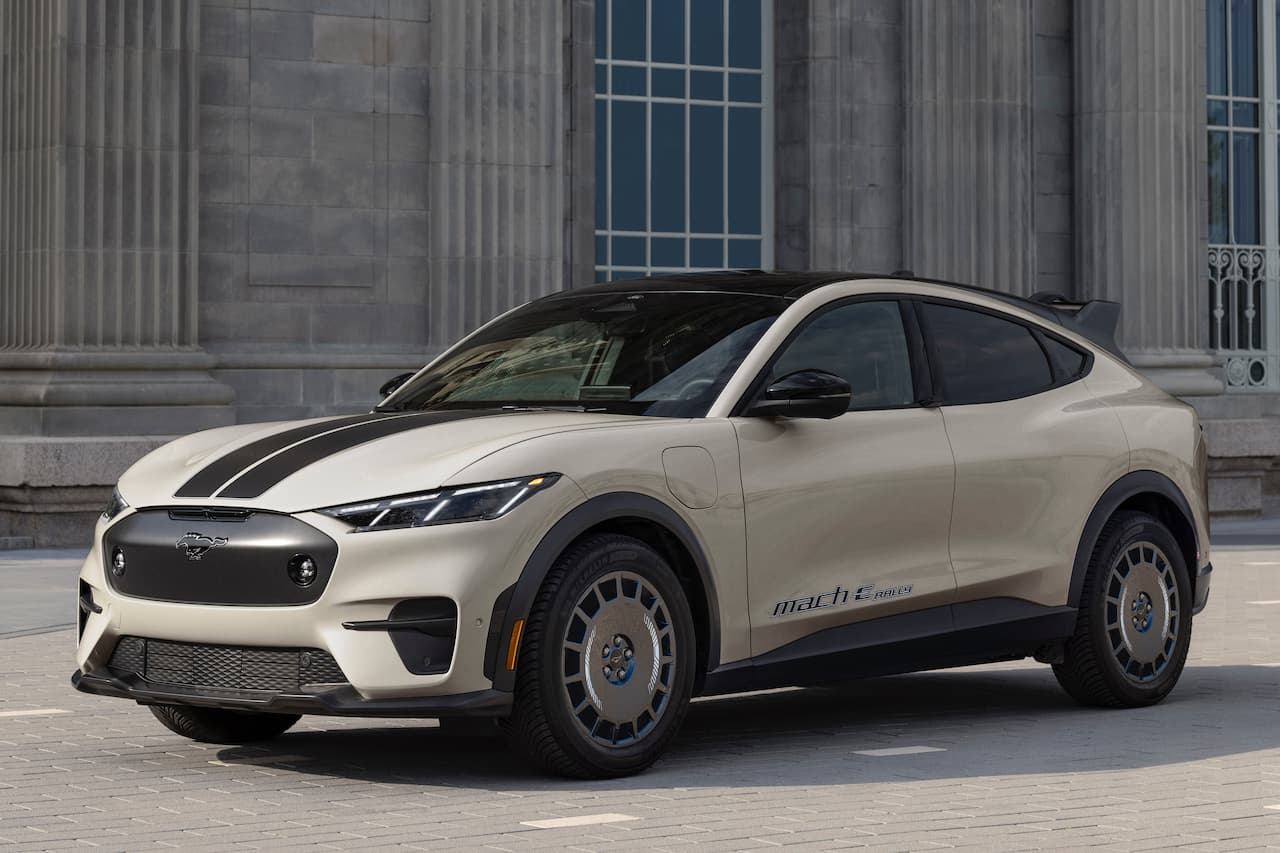
Sales of the E-Transit electric van dropped nearly 59%, and F-150 Lightning sales fell 18.5%, an expected outcome after Ford officially discontinued the model late in 2024. One bright spot remained: the Mustang Mach-E, which held steady with 51,620 units sold, maintaining its position as one of the best-selling EVs in the U.S.
Policy Shifts Reshape the EV Market
The broader EV slowdown reflects structural changes across the U.S. auto market. The expiration of the $7,500 federal EV tax credit on September 30 had an immediate and lasting impact, accelerating purchases earlier in the year while making EVs more expensive overnight.
At the same time, the Trump administration’s rollback of several clean vehicle regulations reduced pressure on automakers to rapidly electrify their fleets. These shifts collectively cooled consumer demand and gave manufacturers more flexibility to slow EV rollouts.
Ford Bets on Hybrids and a Delayed EV Reset
Ford is responding by recalibrating its strategy. The company has canceled several EV programs and is placing its long-term bet on a next-generation Universal EV Platform, expected to debut in 2027 with a $30,000 electric pickup aimed at mass-market buyers.
However, slowing down carries risks. Competitors such as General Motors already offer a broader EV portfolio, even though GM does not currently sell hybrids. Ford argues that its diversified powertrain strategy gives it an edge during periods of market uncertainty.

A Strategic Advantage—or a Temporary One?
In a recent statement, Ford said its powertrain mix enabled it to outperform GM and Stellantis in total electrified vehicle sales, combining hybrids, plug-in hybrids, and EVs. The claim highlights Ford’s ability to adapt—but also raises questions about long-term competitiveness as rivals continue expanding their EV lineups.
For now, Ford’s hybrid success offers stability. Whether it proves to be a bridge to a stronger EV future—or a detour—remains an open question.
Recommend Reading: Ford’s Affordable EV Platform Faces Uncertain Future in Europe


Share:
GM’s EV Sales Soared in 2025, Then Hit a Sharp Reality Check
Tesla Still Leads Used EV Sales, but Competition Is Catching Up