





Managing EV Charging Apps Has Been a Real Pain Point
For many EV drivers, public charging has improved in recent years—but the user experience has remained fragmented. Different networks require different apps, logins, and payment methods, making road trips and daily charging more complicated than they need to be.
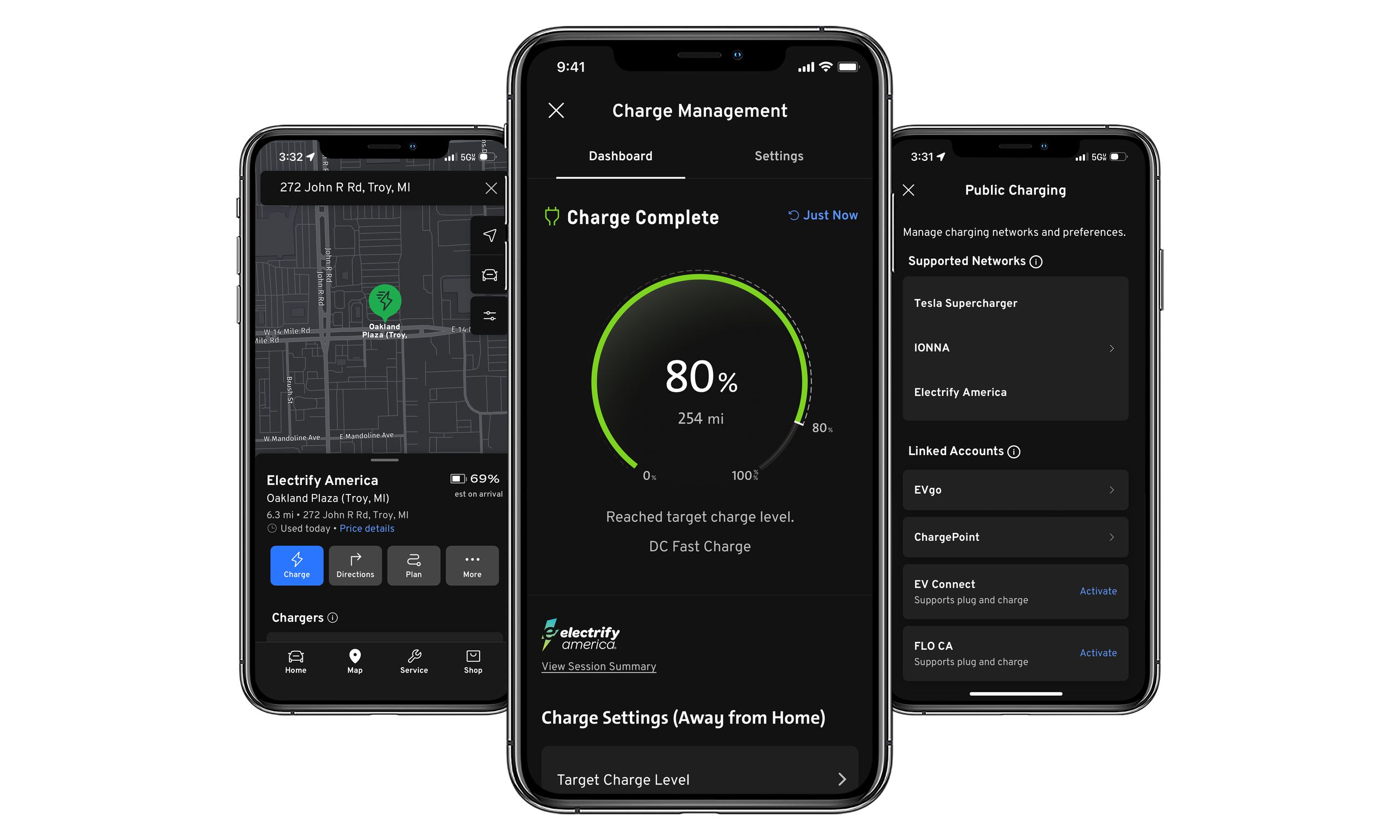
General Motors is now taking a meaningful step to reduce that friction. More than 5,000 Electrify America DC fast chargers across the U.S. have been fully integrated into GM’s own vehicle apps, allowing drivers to manage charging from a single interface instead of juggling multiple platforms.

Electrify America Is Now Built Into GM’s Core Apps
With the update, owners of Chevrolet, GMC, and Cadillac electric vehicles can use the native myChevrolet, myGMC, and myCadillac apps to locate Electrify America chargers, check availability, initiate a charging session, and pay—without opening a third-party app.
Drivers are not locked into GM’s system and can still use Electrify America’s standalone app or services like PlugShare. However, bringing charging discovery and payment into one familiar app significantly lowers the learning curve, especially for new EV owners.
This change targets one of the most common complaints about EV ownership: managing too many charging platforms at once.
A Broader Public Charging Network in One Place
Electrify America is not the only charging provider included. GM has also integrated Tesla Superchargers and Ionna, expanding the total network accessible through its apps.
According to GM, its EV drivers now have access to more than 250,000 public chargers across the United States and Canada. Within the app, users can search for chargers, view real-time availability, and plan routes that include charging stops.
The goal is not just more chargers, but better visibility and predictability, which are critical for long-distance travel and daily planning alike.
What GM’s Charging Apps Can Actually Do
Beyond simply finding a charger, GM’s apps support a growing list of functions designed to streamline charging:
-
Real-time station and stall availability
-
Route planning with charging stops
-
Live monitoring of charging sessions
-
In-app payment and session management
By centralizing these features, GM is aligning its charging experience more closely with how drivers already use navigation and vehicle apps—rather than forcing them to learn separate systems for each network.
Why This Matters as GM’s EV Sales Grow
This integration arrives at a key moment for GM. In 2025, the company set a new EV sales record in the U.S., solidifying its position as the second-largest EV maker in the country.
The Chevy Equinox EV became the best-selling non-Tesla EV in the U.S., more than doubling its sales volume compared to 2024. As GM brings more mainstream buyers into EV ownership, simplifying charging becomes less of a nice-to-have and more of a necessity.
Reducing friction at public chargers can directly impact customer satisfaction, retention, and confidence in choosing an EV over a gasoline vehicle.

Electrify America Continues to Expand Despite Industry Headwinds
Electrify America, meanwhile, is continuing to scale its infrastructure. According to the U.S. Department of Energy’s Alternative Fuels Data Center, the company now operates 1,116 stations nationwide, with 5,405 fast-charging ports currently in service.
Electrify America leadership framed the integration as a step toward consistency and reliability. As EV adoption grows, charging convenience is becoming just as important as charging speed.
A Small Change With Real Impact
On its own, app integration may seem like a modest update. But for EV drivers tired of switching between platforms, this move removes one of the everyday annoyances of public charging.
As competition in the EV market intensifies, improvements like this show how automakers can differentiate not just through vehicles—but through the ownership experience that surrounds them.
Recommend Reading: Home Charging vs Public Charging: What’s Best for New EV Owners?


Share:
How Australia Shows What Cheap Chinese EVs Could Mean for Canada
Toyota Expands Its EV Lineup With Two New Crossovers and Clear Pricing