



Accessing Tesla Superchargers Beyond Teslas
With over 25,000 Tesla Superchargers across North America, non-Tesla EV owners gain access to a widely regarded DC fast-charging network. However, Superchargers were designed for Tesla vehicles, all with the charging port on the rear left, creating difficulties for owners of Ford, Rivian, GM, and other EVs. Short cables often force non-Tesla owners to occupy two charging bays, complicating station use.
Charging adapters are now a common part of EV ownership, but a single solution has emerged to tackle both cable length and compatibility.

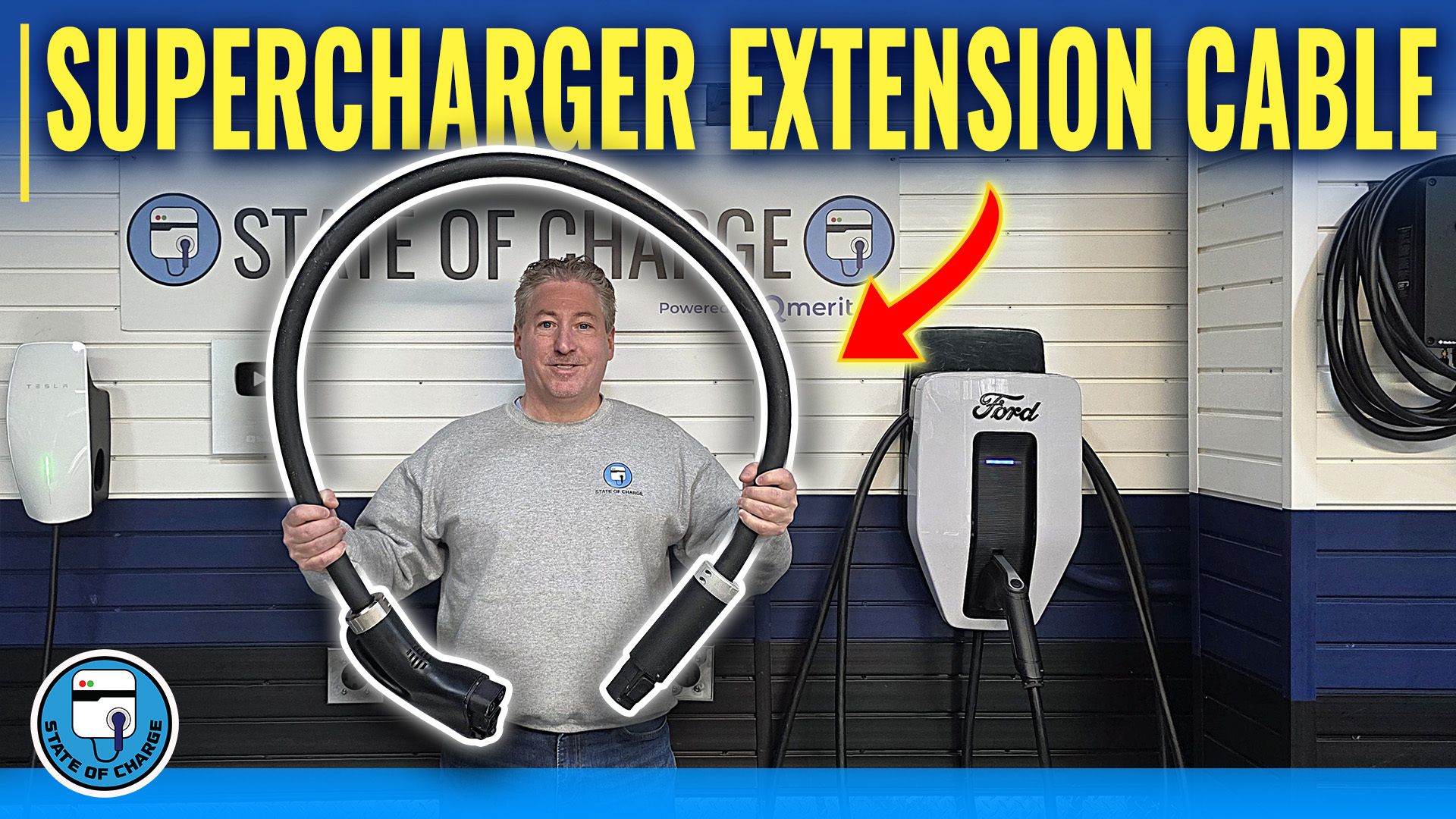
Introducing the NACS to CCS1 Extension Cable
Hansshow’s NACS to CCS1 extension cable addresses these issues by extending the Supercharger cable and providing a CCS1 connector compatible with various EVs. The second-generation version introduces multiple improvements over the first, which had a significant safety flaw:
-
The original cable had a switch on the CCS1 side that stopped charging but a manual release on the NACS side that did not stop electricity flow, risking a high-voltage arc.
Hansshow resolved this issue and enhanced the product with longer cable options and higher electrical ratings.
Technical Improvements in the Second Generation
The new cable is available in 5- and 8-foot lengths, compared with the original 5-foot model. Electrical specifications are upgraded to 1,000 volts and 350 amps continuous, up from 1,000 volts and 250 amps. Testing at 500 amps confirmed no overheating.
All components are UL-certified, although the full product has not yet received UL certification. These improvements aim to provide both safety and reliability for non-Tesla EV owners using Superchargers.
Real-World Performance
Early testing by EV expert Tom Moloughney found the second-generation cable performs similarly to a standard NACS to CCS1 adapter, unlike the first version that had issues with vehicles like the Rivian R1S and Ford F-150 Lightning.
Key enhancements include:
-
Active release switches on both ends
-
Longer cable lengths
-
Higher amperage rating
Pre-orders are now available, with delivery scheduled for mid-January. Pricing is $629 for 5 feet and $729 for 8 feet. While useful for situations requiring two charging spots, the cost remains substantial.

Warranty and Safety Considerations
It’s important to note that Tesla and most automakers recommend against unapproved adapters. Using such an extension could void vehicle warranties if a malfunction occurs during charging. Non-Tesla EV owners should weigh convenience against potential risks and the product’s price point.
Recommend Reading: Updated List: Every Non-Tesla EV That Can Use Tesla Superchargers in 2025
Share:
Ford Recalls F-150 Lightning and Other EVs Over Park Module Issue
European EV Market Sees Strong Gains in 2025: Top Brands and Models