Rising Expectations for Faster Charging

Hyundai’s latest electric vehicles already charge faster than many competitors, thanks to their 800-volt architecture. Models like the Ioniq 5 and its platform siblings routinely jump from 10% to 80% in under 20 minutes when connected to high-powered DC fast chargers. For several years, such speeds were reserved for premium EVs costing far more.

Yet Hyundai believes current performance is no longer enough. While many of its EVs peak around 225 kW, new models from rivals—especially in China—are pushing toward 400 kW and beyond. As the market evolves, Hyundai says it must keep raising the bar to stay competitive.

2026 ioniq 5


Why Hyundai Wants Much Faster Charging

Tyrone Johnson, head of Hyundai’s new European development center, told Auto Express that ultra-fast charging will be critical for convincing traditional gas-car drivers to switch.

Consumers may appreciate 20-minute charging sessions, but Johnson says many still compare EVs to gas vehicles that refuel in minutes. The concern isn’t only convenience—it’s perception.

“Customers expect refueling to take about three minutes, just like an internal-combustion car,” Johnson explained. He added that range anxiety and uncertainty about future driving needs continue to influence buying decisions. For Hyundai, cutting charging time dramatically is part of the solution.


Competition Is Moving Quickly

On today’s public fast chargers—typically rated up to 350 kW—the Ioniq 5 already performs well, often hitting its 10–80% charge in about 20 minutes. Some drivers report even faster real-world results under ideal conditions. Still, many mainstream EVs remain in the 20–30 minute window.

But rivals are accelerating. Porsche’s new Cayenne Electric, for example, claims a 400 kW peak. According to Porsche, this can reduce a 10%–80% charging session to as little as 16 minutes, though the company hasn’t clarified what type of charger would be required to reach those speeds. While Porsche operates in a higher price bracket, Hyundai must still keep pace to maintain its reputation for innovation.


Hyundai’s Push Toward 400 kW and Higher

According to the Auto Express report, Hyundai is actively testing 400 kW charging capability in its engineering labs. The goal is not only to cut charging time but also to improve overall efficiency without simply enlarging battery packs.

Increasing battery size would add weight, cost, and longer charging durations—trade-offs that Hyundai wants to avoid. Instead, the company is exploring improvements in cell chemistry, cooling, and software that allow more power to be accepted more safely and efficiently.

2026 ioniq 5


The Three-Minute Goal—and the Global Race Ahead

Reaching three-minute charging is a massive challenge. Even the most advanced systems today fall short. In China, BYD can achieve roughly five-minute top-ups, but only using a highly specialized 1,000 kW (1 MW) charging station paired with compatible EVs. Zeekr has gone even further: its updated 001 can accept over 1.3 MW, enabling a 10% to 80% charge in under seven minutes.

These examples show what’s possible at the cutting edge, but the technology is far from mainstream. Nevertheless, Hyundai views ultra-fast charging as central to the next phase of EV adoption. Today’s capabilities are only the starting point, and the company believes the future will demand much more.

Recommend Reading: Hyundai Unlocks Key to Solid-State EV Batteries

FAQs – DC-Schnellladen der Stufe 3

Was ist DC-Schnellladen der Stufe 3 für Elektrofahrzeuge?

Beim Laden der Stufe 3, auch als DC-Schnellladen (DCFC) bekannt, wird Gleichstrom mit hoher Leistung (typischerweise 50 kW bis 350 kW) bereitgestellt, um die Batterie eines Elektrofahrzeugs schnell aufzuladen. Im Gegensatz zum Laden der Stufen 1 und 2 wird beim DC-Schnellladen das Bordladegerät umgangen, wodurch eine deutlich schnellere Energieübertragung ermöglicht wird.

Wie schnell ist das DC-Schnellladen der Stufe 3 im Vergleich zum Laden der Stufe 2?

Ladegeräte der Stufe 2 (240 V Wechselstrom) erhöhen die Reichweite normalerweise um 20–30 Meilen pro Stunde, während Gleichstrom-Schnellladegeräte der Stufe 3 die Reichweite in 20–40 Minuten um 100–300 Meilen erhöhen können, je nach Batteriekapazität des Elektrofahrzeugs und Ladeleistung.

Schädigt Schnellladen der Stufe 3 die Batterien von Elektrofahrzeugen?

Häufiges DC-Schnellladen kann aufgrund höherer Wärmeentwicklung und schnellerer Ladezyklen die Batterieleistung mit der Zeit beschleunigen. Moderne Elektrofahrzeuge verfügen jedoch über Batterie-Wärmemanagementsysteme , die die Auswirkungen minimieren. Gelegentliches Schnellladen ist sicher und bequem für Roadtrips.

Welche Steckertypen werden für das DC-Schnellladen der Stufe 3 verwendet?

Die wichtigsten Schnellladeanschlüsse für Elektrofahrzeuge in Nordamerika sind:

  • CCS (Combined Charging System) – von den meisten Automobilherstellern weithin übernommen
  • CHAdeMO – wird hauptsächlich von älteren Nissan LEAF-Modellen verwendet
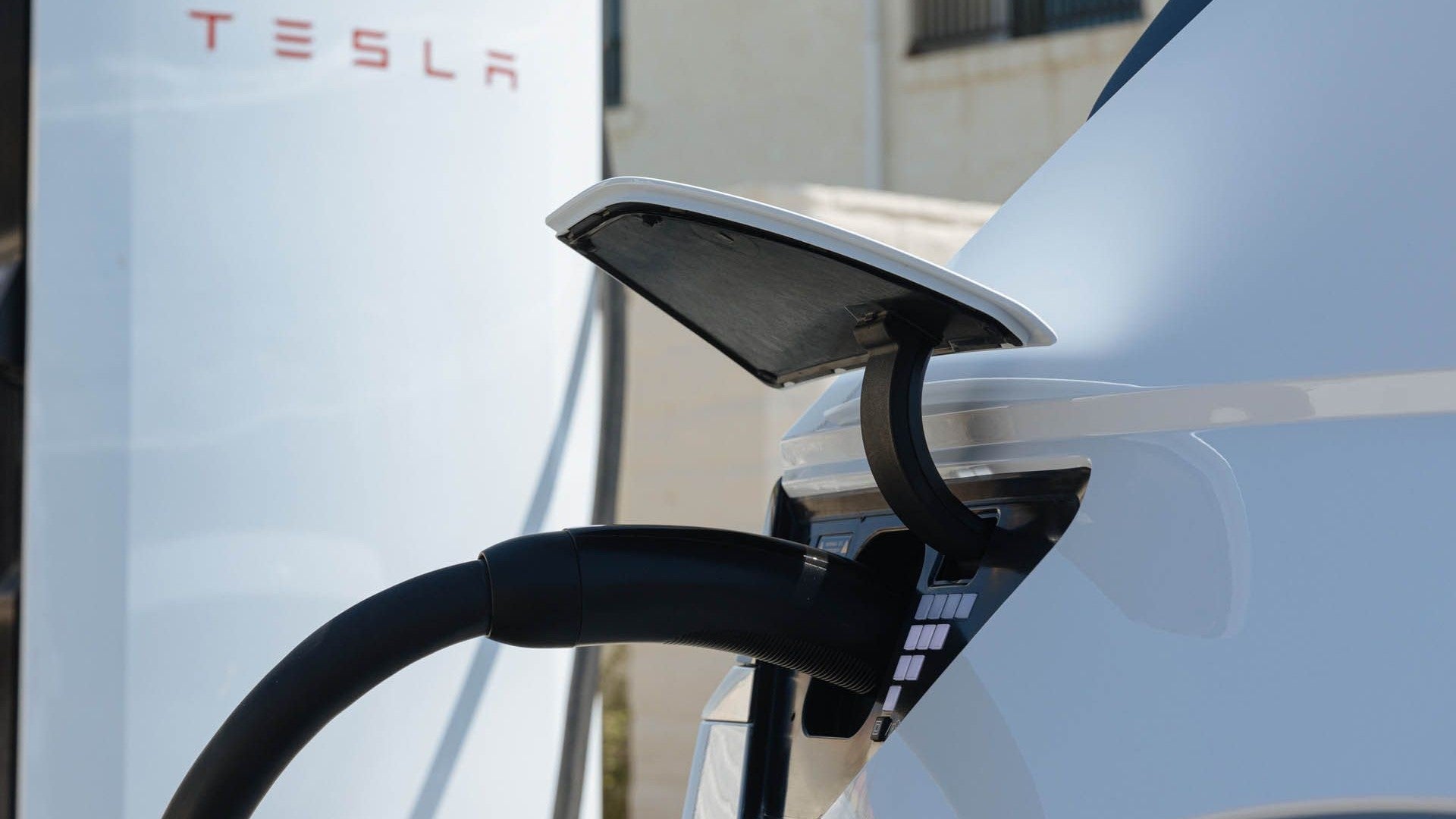
  • NACS (Tesla-Stecker) – wird jetzt von mehreren Marken übernommen (Ford, GM, Rivian usw.)
Wie hoch ist die maximale Leistungsabgabe von DC-Schnellladestationen der Stufe 3?

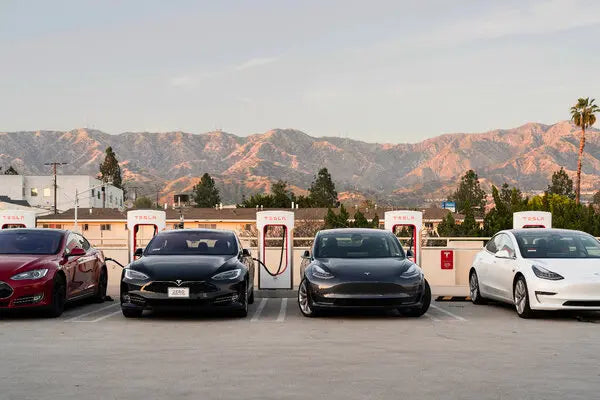
Die meisten öffentlichen Gleichstrom-Schnellladegeräte haben eine Leistung von 50 bis 150 kW , während Ultraschnellladegeräte 250 bis 350 kW erreichen können. Tesla Supercharger V3 liefern bis zu 250 kW , und kommende Ladegeräte der nächsten Generation könnten für schwere Elektrofahrzeuge über 500 kW leisten.

Wie viel kostet das DC-Schnellladen der Stufe 3?

Die Preise variieren je nach Netz und Standort. Die Kosten basieren in der Regel auf einer Gebühr pro kWh , pro Minute oder einer Pauschalgebühr. In den USA liegen die Tarife typischerweise zwischen 0,25 und 0,60 US-Dollar pro kWh . Dies ist zwar teurer als beim Laden zu Hause, aber im Vergleich zu den Benzinkosten wettbewerbsfähig.

Wo finde ich in den USA Gleichstrom-Schnellladestationen der Stufe 3?

Gleichstrom-Schnellladegeräte finden sich häufig entlang von Autobahnen, Raststätten, Einkaufszentren und Ladestationen für Elektrofahrzeuge wie Tesla Supercharger, Electrify America, EVgo und ChargePoint. Apps wie PlugShare und ChargeHub helfen Fahrern bei der Suche nach Schnellladestationen.

Können alle Elektrofahrzeuge die Gleichstrom-Schnellladefunktion der Stufe 3 nutzen?

Nicht alle Elektrofahrzeuge sind kompatibel. Einige Plug-in-Hybrid-Elektrofahrzeuge (PHEVs) und ältere Modelle verfügen nicht über die Fähigkeit zum DC-Schnellladen. Die maximale Ladegeschwindigkeit hängt auch von der Ladekapazität des Fahrzeugs ab, die zwischen 50 und 270 kW liegen kann.

Wie wirkt sich das Wetter auf die Ladegeschwindigkeit von DC Level 3 aus?

Extreme Kälte oder Hitze beeinträchtigen die Temperaturregelung der Batterie und verlangsamen die Schnellladegeschwindigkeit. Elektrofahrzeuge konditionieren die Batterie häufig vor der Ankunft an einer Schnellladestation, um die Ladeeffizienz bei winterlichen oder sommerlichen Bedingungen zu optimieren.

Wie sieht die Zukunft der DC-Schnellladetechnologie der Stufe 3 aus?

Die Zukunft umfasst ultraschnelle Ladegeräte (500 kW+), die flächendeckende Einführung von NACS-Anschlüssen und die Vehicle-to-Grid-Integration (V2G) . Mit dem Ausbau der EV-Infrastruktur wird das Laden der Stufe 3 für Langstreckenfahrten und schwere Elektro-Lkw noch wichtiger.

EV-Neuigkeiten

Alle anzeigen

GM Records $7.1 Billion Charge as EV Strategy Shifts

GM Records $7.1 Billion Charge as EV Strategy Shifts

General Motors took a $7.1 billion charge after cutting back EV capacity in North America. Policy changes, slower demand, and factory realignments are reshaping GM’s electrification strategy without ending it.

Weiterlesen

Kia EV2 Debuts as a New Entry-Level Electric Crossover for Europe

Kia EV2 Debuts as a New Entry-Level Electric Crossover for Europe

Kia’s new EV2 targets Europe’s growing demand for affordable electric crossovers. With up to 278 miles of range, fast charging, and urban-friendly design, it aims to bring EV ownership within reach of more buyers.

Weiterlesen

California Plans $200 Million EV Incentive Program

California Plans $200 Million EV Incentive Program

California is proposing a $200 million incentive program to support EV buyers after the federal tax credit ended. The plan could offer upfront discounts and help sustain EV adoption in the nation’s largest electric vehicle market.

Weiterlesen