




Rivian’s Next Step Toward Scalable Autonomy
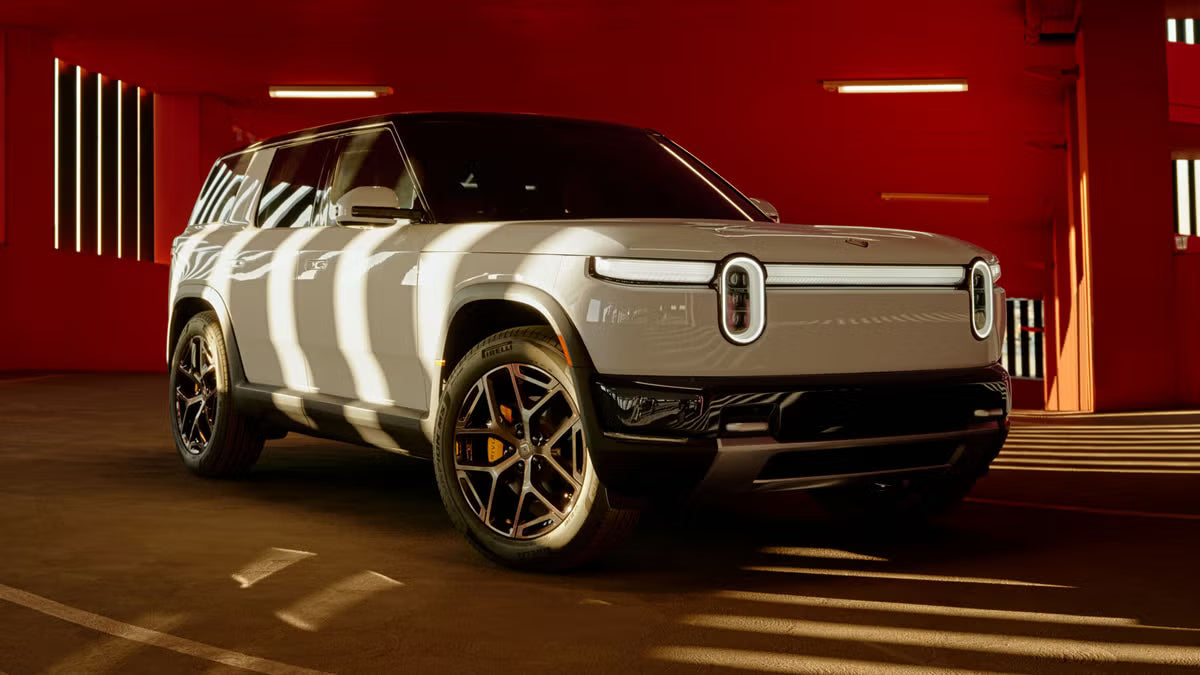
Rivian’s R2 crossover, positioned as a $45,000 entry point into the brand, is shaping up to be one of 2026’s most influential EVs. At the company’s Autonomy and AI Day, Rivian confirmed that the model will adopt a lidar sensor and its first in-house autonomy computer, marking a major leap in its long-term automated-driving strategy.
The lidar module will begin appearing on R2 units in late 2026, a few months after production starts. Rivian says the sensor—long viewed as essential for reliable autonomous perception—will help unlock far more capable assistance features and eventually support higher-level autonomy.

Why Lidar Marks a Shift for Rivian
Lidar uses laser pulses to build a detailed 3D map of the environment, enabling a vehicle to detect objects with high precision even in difficult lighting or weather. Rivian executives say this capability will underpin the company’s roadmap toward Level 4 automation, defined as hands-off driving within specified conditions.
“Lidar is an incredible sensor… you see it on all of the L4 players,” said James Philbin, Rivian’s vice president of autonomy and AI. Though Rivian is far from deploying true L4 capability, the R2’s hardware sets the groundwork for that future.
The company’s immediate plan centers on Universal Hands-Free, launching this month, which expands hands-off driving from limited highway segments to millions of miles of marked roads. Gen 2 R1T and R1S models will gain point-to-point navigation next year, though they lack the lidar hardware required for deeper automation later on.
A New Compute Platform to Power Future Features
Rivian also introduced the Rivian Autonomy Processor, its first custom chip designed specifically for automated driving. The processor is now in validation and will debut in the R2 alongside lidar.
Building both software and silicon in-house, Philbin said, allows Rivian to achieve performance levels not possible with off-the-shelf chips. The paired system will help process richer driving data, enabling faster model training and improved detection capability across all assistive features.
At launch, lidar-equipped R2s will display enhanced augmented-reality visualizations and improved long-range object recognition, especially in challenging conditions. Rivian has not yet clarified whether lidar will be standard or optional, saying additional R2 details will come closer to launch.
Where Rivian Stands in the Autonomy Race
Rivian is pushing forward at a moment when consumer and investor interest in autonomy is rising again. Yet the company still trails leaders in several key areas. Tesla continues to expand its Full Self-Driving (Supervised) system, and Waymo remains the only firm to operate a large-scale driverless service in the U.S. Meanwhile, automakers like Lucid, Nissan and Mercedes-Benz are developing their own next-generation systems with ambitions of point-to-point or urban automated driving.
Rivian itself only recently introduced hands-free highway driving, years after GM’s Super Cruise and Ford’s BlueCruise. Still, the company believes its new sensor suite and compute platform will close the gap quickly.
CEO RJ Scaringe told Automotive News that Rivian vehicles should be capable of true driverless travel “well before the end of the decade,” though the company stopped short of offering a specific rollout schedule.

The High Stakes for the R2 Program
For Rivian, the R2 is more than a volume play—it represents the foundation of its broader autonomy ambitions. The compact electric crossover must succeed commercially while proving that Rivian can scale advanced driver-assistance technology responsibly and competitively.
In the near term, lidar-equipped R2s will help Rivian gather richer real-world driving data, accelerating improvements to the entire Autonomy Platform. Long term, the hardware could position the R2 as one of the most accessible vehicles in the U.S. with Level-4-ready sensors, thanks to the sharply declining cost of lidar.
As Scaringe said earlier this year, the R2 “must go well.” With autonomy now central to the model’s identity, the stakes have only grown higher.
Recommend Reading: Rivian Sets Stage for Major Autonomy Push With First AI & Driver-Tech Showcase
Share:
Rivian Unveils New Hands-Free Driving and AI Assistant
Musk Reflects on Political Detour as Tesla Faces Sales Declines