


Ford Motor Company is making a dramatic pivot in its electric vehicle strategy, pulling back from several high-profile EV projects while placing a critical bet on a new low-cost electric platform. At the center of this strategy is a $30,000 electric pickup being developed by a semi-independent internal team, a project Ford executives increasingly describe as essential to the company’s long-term survival.

Ford universal EV platform.


Ford Scales Back Its Current EV Ambitions

Ford’s latest announcements mark a sharp contrast with its public warnings about the global EV threat, particularly from China. The automaker is ending production of the current F-150 Lightning, abandoning plans for a next-generation all-electric version, canceling an electric commercial van, and refocusing its Tennessee EV facility into a conventional truck plant.

According to Ford, EV demand and pricing realities failed to align with earlier forecasts. Executives acknowledged that the current EV lineup struggles to achieve profitability, forcing the company to retrench even as global competition accelerates.


The $30,000 Electric Truck Takes Center Stage

Despite the pullback, Ford insists it is not abandoning the electric future. Instead, it is consolidating its efforts around a “Universal EV Platform”, designed to support affordable, scalable electric vehicles.

Company leaders say the first model on this platform will be a compact electric pickup priced around $30,000, with additional variants to follow. The goal is to deliver strong range, usable performance, and pricing that can compete globally, including against Chinese manufacturers known for cost efficiency.

Ford executives describe this platform as make-or-break, with future EV growth hinging entirely on its success.


Why Ford Created a Skunkworks EV Division

To execute this strategy, Ford turned to an unconventional solution: a California-based skunkworks team operating outside traditional corporate structures.

The division is led by Doug Field, a veteran executive with experience at Ford, Apple, Tesla, and Segway. His mandate is to rethink vehicle development from the ground up, borrowing ideas from the tech sector rather than legacy automaking.

The skunkworks team was deliberately isolated to avoid internal bureaucracy. Other Ford employees reportedly cannot access the facility, underscoring how seriously the company views the need for speed, secrecy, and autonomy.


Faster Development Is the Only Path Forward

One of the core goals of the skunkworks effort is cutting development time from seven years to as little as three or four. That timeline more closely mirrors Chinese automakers, which have reshaped expectations around speed and cost.

Ford is also rethinking manufacturing. Vehicles on the new platform will be built using a redesigned production system at its Louisville, Kentucky facility following a $2 billion investment. The company aims to modernize its approach in a way comparable to Tesla’s modular production concepts.


Competing in a World Dominated by Cost Efficiency

Affordability is no longer optional. Chinese automakers are expanding rapidly across global markets, offering feature-rich EVs at prices legacy brands struggle to match.

Ford acknowledges that without a dramatic cost reset, it cannot remain competitive. The Universal EV Platform is intended to deliver software-defined vehicles that can be reused across multiple models, reducing development and production costs.


Political and Market Headwinds at Home

Ford’s EV reset is also shaped by changes in U.S. policy. Looser fuel efficiency rules, reduced EV incentives, and higher tariffs have altered the profitability equation. Executives admitted that earlier assumptions about EV adoption—once projected at nearly half of all sales by 2030—no longer hold.

As a result, Ford is leaning into extended-range electric trucks, including a future F-150 Lightning variant with a gas-powered range extender promising over 700 miles of total range.

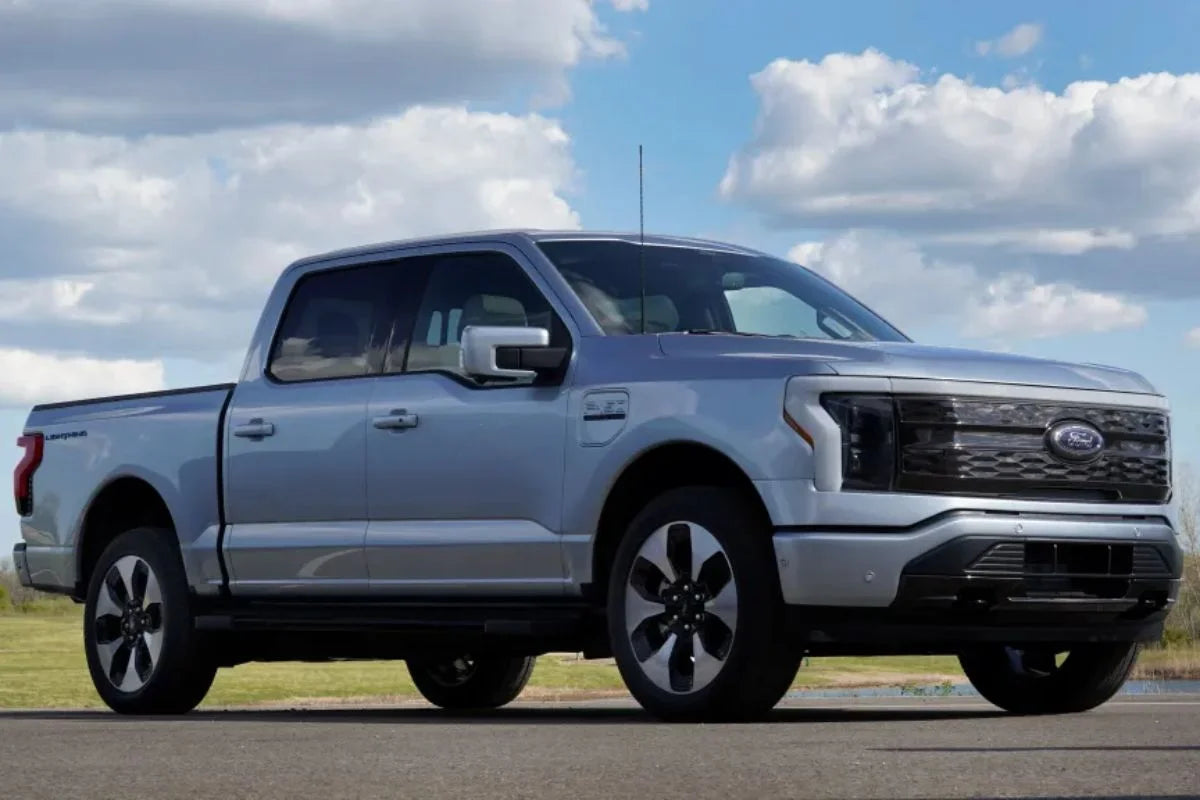
Ford electric truck being showcased nearby the dealer.


A High-Stakes Gamble on Reinvention

The skunkworks program represents a tacit admission that Ford’s traditional approach is no longer sufficient. By separating innovation from the core organization, Ford is attempting a reset rather than an incremental fix.

The first electric pickup from this program is not expected until 2027, leaving little room for error. If Ford delivers on its promises, it could reestablish relevance in the global EV market. If not, the company risks falling further behind in an industry that is moving faster than ever.

Recommend Reading: Ford’s EV Retreat Signals Opportunity for Chinese Automakers

Hinterlassen Sie einen Kommentar

Bitte beachte, dass Kommentare vor der Veröffentlichung freigegeben werden müssen.

Diese Website ist durch hCaptcha geschützt und es gelten die allgemeinen Geschäftsbedingungen und Datenschutzbestimmungen von hCaptcha.

FAQs – Chinesische Elektrofahrzeuge für US-Elektrofahrzeugnutzer

Was ist Ford BlueCruise und wie funktioniert es?

Ford BlueCruise ist die freihändige Fahrtechnologie von Ford, die auf ausgewählten Autobahnen in Nordamerika, den sogenannten Blue Zones , verfügbar ist. Sie nutzt eine Kombination aus adaptiver Geschwindigkeitsregelung, Spurzentrierung, GPS-Kartierung und auf den Fahrer gerichteten Kameras, um freihändiges Fahren zu ermöglichen und gleichzeitig sicherzustellen, dass der Fahrer aufmerksam bleibt.

Welche Ford- und Lincoln-Fahrzeuge sind mit BlueCruise ausgestattet?

Ab 2025 ist BlueCruise für beliebte Modelle wie den Ford Mustang Mach-E, F-150 Lightning, F-150, Expedition sowie Lincoln Navigator, Aviator und Corsair verfügbar. Ford plant, die Verfügbarkeit von BlueCruise in den kommenden Jahren auf weitere Elektro- und konventionelle Fahrzeuge auszuweiten.

Wie viel kostet Ford BlueCruise?

BlueCruise bietet in der Regel eine Testphase (90 Tage bis 3 Jahre, je nach Modell) und erfordert anschließend ein Abonnement. Die Preise beginnen bei etwa 800 US-Dollar pro Jahr oder 75 US-Dollar pro Monat , wobei die Pakete je nach Fahrzeug und Händlerangeboten variieren.

Was sind Ford BlueCruise Blue Zones?

Blue Zones sind vorkartierte, geteilte Autobahnen, auf denen BlueCruise für freihändiges Fahren validiert wurde. Ab 2025 decken Blue Zones über 200.000 Meilen Autobahnen in den USA und Kanada ab, wobei Ford die Abdeckung durch drahtlose Updates erweitert.

Ist Ford BlueCruise dasselbe wie Tesla Autopilot oder GM Super Cruise?

Nein. Obwohl es sich bei allen um Fahrerassistenzsysteme (ADAS) handelt, funktioniert jedes anders. Tesla Autopilot basiert auf kamerabasierter KI , GM Super Cruise nutzt LiDAR-basierte HD-Karten und Ford BlueCruise kombiniert adaptive Geschwindigkeitsregelung, Spurzentrierung und Fahrerüberwachung . BlueCruise ist eher für praktisches und sicheres Fahren auf der Autobahn als für völlig autonomes Fahren konzipiert.

Funktioniert Ford BlueCruise bei schlechtem Wetter oder starkem Verkehr?

BlueCruise funktioniert bei Regen, Nebel und Stop-and-Go-Verkehr . Bei extremen Wetterbedingungen wie Schneestürmen oder wenn die Fahrbahnmarkierungen nicht sichtbar sind, kann die Leistung jedoch eingeschränkt sein. Das System erfordert stets die Aufmerksamkeit und Übernahmebereitschaft des Fahrers.

Kann Ford BlueCruise mit neuen Funktionen aktualisiert werden?

Ja. BlueCruise ist mit Over-the-Air-Updates (OTA) ausgestattet. Das bedeutet, dass Ford neue Funktionen veröffentlichen, Blue Zones erweitern und die Systemleistung verbessern kann, ohne dass ein Besuch beim Händler erforderlich ist. Das macht BlueCruise im Vergleich zu herkömmlichen ADAS-Systemen zukunftssicher .

Macht Ford BlueCruise ein Fahrzeug vollständig selbstfahrend?

Nein. Ford BlueCruise ist gemäß SAE-Standards als autonomes Fahrsystem der Stufe 2 eingestuft. Das bedeutet, dass es unter bestimmten Bedingungen die Freisprechfunktion bietet, der Fahrer jedoch stets aufmerksam bleiben und die Straße im Auge behalten muss.

Welche Sicherheitsmerkmale bietet Ford BlueCruise?

BlueCruise nutzt Infrarotkameras, die auf den Fahrer gerichtet sind und dafür sorgen, dass der Blick des Fahrers auf der Straße bleibt. Schaut der Fahrer zu lange weg, gibt das System Warnungen aus und bremst das Fahrzeug schrittweise ab, wenn keine Reaktion erkannt wird. Das macht es sicherer als Systeme, die die Unaufmerksamkeit des Fahrers zulassen.

Wie sieht die Zukunft der Ford BlueCruise-Technologie aus?

Ford plant, BlueCruise weiter auszubauen. Dazu gehören mehr kartierte Straßen, eine verbesserte Spurwechselautomatisierung und die Integration mit Elektrofahrzeugplattformen wie dem Mustang Mach-E und dem F-150 Lightning. Bis 2030 will Ford BlueCruise zu einem Eckpfeiler seines vernetzten Fahrzeug-Ökosystems machen und damit direkt mit Tesla FSD und GM Super Cruise konkurrieren.

EV-Neuigkeiten

Alle anzeigen

Jaguar Commits to an All-Electric Future Despite Market Doubts

Jaguar Commits to an All-Electric Future Despite Market Doubts

Jaguar is fully committed to reinventing itself as a premium electric brand, rejecting hybrids and gas engines as it prepares a bold new flagship EV aimed at restoring desirability and relevance in a shifting global market.

Weiterlesen

F-150 Lightning

Ford Scales Back EV Ambitions at a Cost of Nearly $20 Billion

Ford is absorbing nearly $19.5 billion in costs as it scales back EV plans, cancels key electric models, and pivots toward hybrids and extended-range vehicles amid slower-than-expected EV adoption.


Weiterlesen

Ford Bets on a $30,000 Electric Truck to Reset Its EV Strategy

Ford Bets on a $30,000 Electric Truck to Reset Its EV Strategy

Ford is pulling back from several electric vehicle projects while betting its future on a low-cost EV platform led by a skunkworks team. A $30,000 electric pickup could determine whether the automaker can compete globally.

Weiterlesen