


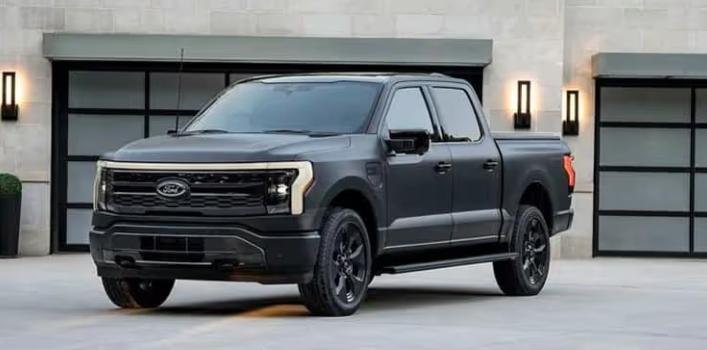
Ford Motor Company is paying a steep price for recalibrating its electric vehicle strategy. After years of aggressive investment in battery-electric vehicles, the automaker has confirmed a major pullback—one that will cost nearly $19.5 billion as it shifts toward hybrids, extended-range EVs, and conventional gasoline models.

The move reflects a broader reassessment of EV demand in the U.S. market, where adoption has grown more slowly than Ford once projected. While the company insists this is not an exit from electrification, it is a costly acknowledgment that its earlier expectations were overly optimistic.

Ford F-150


A Market That Didn’t Move as Fast as Planned

Ford previously planned for EVs to account for roughly 45% of U.S. vehicle sales by 2030, a scenario that now appears unrealistic. Today, electrified vehicles—including mild hybrids, plug-in hybrids, and battery-electric models—make up about 17% of Ford’s global sales volume.

Instead of doubling down on a pure EV roadmap, Ford is now pivoting toward a more mixed portfolio. That includes hybrids, extended-range electric vehicles (EREVs), and lower-cost combustion models, which executives say better align with current customer demand.

This strategic shift marks a clear departure from Ford’s earlier commitment to an all-electric future, particularly for large trucks and commercial vehicles.


Major EV Programs Are Being Wound Down

As part of this reset, Ford has confirmed a series of high-profile cancellations and changes. The all-electric F-150 Lightning has ended production, and its planned next-generation successor has been scrapped. Instead, the next Lightning will adopt an extended-range setup using a gasoline engine.

Ford has also canceled a fully electric commercial van and redirected investment away from large-scale battery production. One battery plant originally intended to support EV growth will now be repurposed to produce energy storage systems for AI data centers.

Despite solid sales performance from the Lightning and Mustang Mach-E, both vehicles have proven deeply unprofitable, reinforcing the company’s decision to step back from expensive, low-margin EV programs.


The $19.5 Billion Price of Changing Course

Reversing direction in the auto industry is rarely cheap. Ford estimates that its EV retreat will result in approximately $19.5 billion in special charges over the next several years.

According to the company’s latest financial guidance, $8.5 billion of that total comes from EV-related asset write-downs, with most charges landing in the near term. An additional $5.5 billion in cash costs will be spread through 2027, with a large portion expected next year.

These expenses underscore how deeply Ford had committed to its original EV strategy—and how costly it is to unwind.


Politics, Incentives, and Shifting Consumer Behavior

Ford CEO Jim Farley has framed the pivot as a response to real-world buying behavior rather than ideology. He has emphasized that customers remain sensitive to price, range, and utility, especially as EV incentives disappear and regulatory certainty weakens.

The political environment has also shifted dramatically. Federal EV tax credits are no longer guaranteed, fuel economy rules have been relaxed, and automakers face a far less predictable regulatory outlook than they did just a few years ago.

In that context, Ford’s move reflects a growing industry belief that hybrids may be the most practical bridge between gasoline vehicles and full electrification.

Ford electric truck being showcased nearby the dealer.


EVs Aren’t Dead—But the Timeline Has Changed

Despite the retrenchment, Ford insists it has not abandoned EVs altogether. The company is still investing in a new, low-cost EV platform, anchored by a $30,000 electric pickup planned for 2027.

Rather than betting everything on large, expensive battery packs, Ford is betting that affordability and scale will define the next phase of EV adoption. Whether that bet pays off remains uncertain.

For now, Ford’s retreat highlights a sobering reality: the transition to electric vehicles is proving slower, costlier, and more complex than many automakers anticipated.

Recommend Reading: Ford’s EV Retreat Signals Opportunity for Chinese Automakers

Hinterlassen Sie einen Kommentar

Bitte beachte, dass Kommentare vor der Veröffentlichung freigegeben werden müssen.

Diese Website ist durch hCaptcha geschützt und es gelten die allgemeinen Geschäftsbedingungen und Datenschutzbestimmungen von hCaptcha.

FAQs – Chinesische Elektrofahrzeuge für US-Elektrofahrzeugnutzer

Was ist Ford BlueCruise und wie funktioniert es?

Ford BlueCruise ist die freihändige Fahrtechnologie von Ford, die auf ausgewählten Autobahnen in Nordamerika, den sogenannten Blue Zones , verfügbar ist. Sie nutzt eine Kombination aus adaptiver Geschwindigkeitsregelung, Spurzentrierung, GPS-Kartierung und auf den Fahrer gerichteten Kameras, um freihändiges Fahren zu ermöglichen und gleichzeitig sicherzustellen, dass der Fahrer aufmerksam bleibt.

Welche Ford- und Lincoln-Fahrzeuge sind mit BlueCruise ausgestattet?

Ab 2025 ist BlueCruise für beliebte Modelle wie den Ford Mustang Mach-E, F-150 Lightning, F-150, Expedition sowie Lincoln Navigator, Aviator und Corsair verfügbar. Ford plant, die Verfügbarkeit von BlueCruise in den kommenden Jahren auf weitere Elektro- und konventionelle Fahrzeuge auszuweiten.

Wie viel kostet Ford BlueCruise?

BlueCruise bietet in der Regel eine Testphase (90 Tage bis 3 Jahre, je nach Modell) und erfordert anschließend ein Abonnement. Die Preise beginnen bei etwa 800 US-Dollar pro Jahr oder 75 US-Dollar pro Monat , wobei die Pakete je nach Fahrzeug und Händlerangeboten variieren.

Was sind Ford BlueCruise Blue Zones?

Blue Zones sind vorkartierte, geteilte Autobahnen, auf denen BlueCruise für freihändiges Fahren validiert wurde. Ab 2025 decken Blue Zones über 200.000 Meilen Autobahnen in den USA und Kanada ab, wobei Ford die Abdeckung durch drahtlose Updates erweitert.

Ist Ford BlueCruise dasselbe wie Tesla Autopilot oder GM Super Cruise?

Nein. Obwohl es sich bei allen um Fahrerassistenzsysteme (ADAS) handelt, funktioniert jedes anders. Tesla Autopilot basiert auf kamerabasierter KI , GM Super Cruise nutzt LiDAR-basierte HD-Karten und Ford BlueCruise kombiniert adaptive Geschwindigkeitsregelung, Spurzentrierung und Fahrerüberwachung . BlueCruise ist eher für praktisches und sicheres Fahren auf der Autobahn als für völlig autonomes Fahren konzipiert.

Funktioniert Ford BlueCruise bei schlechtem Wetter oder starkem Verkehr?

BlueCruise funktioniert bei Regen, Nebel und Stop-and-Go-Verkehr . Bei extremen Wetterbedingungen wie Schneestürmen oder wenn die Fahrbahnmarkierungen nicht sichtbar sind, kann die Leistung jedoch eingeschränkt sein. Das System erfordert stets die Aufmerksamkeit und Übernahmebereitschaft des Fahrers.

Kann Ford BlueCruise mit neuen Funktionen aktualisiert werden?

Ja. BlueCruise ist mit Over-the-Air-Updates (OTA) ausgestattet. Das bedeutet, dass Ford neue Funktionen veröffentlichen, Blue Zones erweitern und die Systemleistung verbessern kann, ohne dass ein Besuch beim Händler erforderlich ist. Das macht BlueCruise im Vergleich zu herkömmlichen ADAS-Systemen zukunftssicher .

Macht Ford BlueCruise ein Fahrzeug vollständig selbstfahrend?

Nein. Ford BlueCruise ist gemäß SAE-Standards als autonomes Fahrsystem der Stufe 2 eingestuft. Das bedeutet, dass es unter bestimmten Bedingungen die Freisprechfunktion bietet, der Fahrer jedoch stets aufmerksam bleiben und die Straße im Auge behalten muss.

Welche Sicherheitsmerkmale bietet Ford BlueCruise?

BlueCruise nutzt Infrarotkameras, die auf den Fahrer gerichtet sind und dafür sorgen, dass der Blick des Fahrers auf der Straße bleibt. Schaut der Fahrer zu lange weg, gibt das System Warnungen aus und bremst das Fahrzeug schrittweise ab, wenn keine Reaktion erkannt wird. Das macht es sicherer als Systeme, die die Unaufmerksamkeit des Fahrers zulassen.

Wie sieht die Zukunft der Ford BlueCruise-Technologie aus?

Ford plant, BlueCruise weiter auszubauen. Dazu gehören mehr kartierte Straßen, eine verbesserte Spurwechselautomatisierung und die Integration mit Elektrofahrzeugplattformen wie dem Mustang Mach-E und dem F-150 Lightning. Bis 2030 will Ford BlueCruise zu einem Eckpfeiler seines vernetzten Fahrzeug-Ökosystems machen und damit direkt mit Tesla FSD und GM Super Cruise konkurrieren.

EV-Neuigkeiten

Alle anzeigen

Jaguar Commits to an All-Electric Future Despite Market Doubts

Jaguar Commits to an All-Electric Future Despite Market Doubts

Jaguar is fully committed to reinventing itself as a premium electric brand, rejecting hybrids and gas engines as it prepares a bold new flagship EV aimed at restoring desirability and relevance in a shifting global market.

Weiterlesen

F-150 Lightning

Ford Scales Back EV Ambitions at a Cost of Nearly $20 Billion

Ford is absorbing nearly $19.5 billion in costs as it scales back EV plans, cancels key electric models, and pivots toward hybrids and extended-range vehicles amid slower-than-expected EV adoption.


Weiterlesen

Ford Bets on a $30,000 Electric Truck to Reset Its EV Strategy

Ford Bets on a $30,000 Electric Truck to Reset Its EV Strategy

Ford is pulling back from several electric vehicle projects while betting its future on a low-cost EV platform led by a skunkworks team. A $30,000 electric pickup could determine whether the automaker can compete globally.

Weiterlesen