


Hyundai’s EV Sales Keep Rising

Hyundai ended 2025 with another year of strong EV sales growth, defying the broader slowdown in U.S. electric-vehicle adoption. The Ioniq 5 crossover led the charge, while the newly introduced Ioniq 9 three-row SUV added fresh momentum to the automaker’s lineup.

The Ioniq 5 moved 47,039 units in 2025, up from 44,400 in 2024, setting a new annual record for the model. Meanwhile, the Ioniq 9, not available last year, contributed 5,189 sales. Combined with the Kona Electric and Hyundai’s hybrids, the company claims an all-time high for U.S. electrified vehicle sales, with EVs up 7% year-over-year and hybrids increasing 36%, accounting for roughly one-third of total sales.

2026 ioniq 5


Ioniq 6 and Sedan Challenges

While SUVs drove growth, Hyundai’s Ioniq 6 sedan continued to struggle amid declining U.S. interest in sedans. The model sold 10,478 units in 2025, down from 12,264 in 2024. It remains unclear whether the facelifted version will reach U.S. showrooms, though the high-performance Ioniq 6 N is expected in limited quantities.

This contrast underscores a key insight: SUVs and crossovers dominate the market, and sedans are increasingly marginalized, even with compelling EV technology.

Hyundai Confirms the Ioniq 6 N for the U.S., But Only in Small Numbers


Impact of Ending Federal EV Incentives

The end of the $7,500 federal EV tax credit in late 2025 impacted Hyundai’s fourth-quarter numbers. Ioniq 5 sales in Q4 fell 58% year-over-year, demonstrating how heavily buyers had relied on incentives. Hyundai responded quickly with aggressive price cuts, making the Ioniq 5 one of the most competitive new EVs in the U.S. market.

Meanwhile, Hyundai’s fuel-cell Nexo saw modest activity, with just five units sold for the year, highlighting that hydrogen remains a niche segment.


Kia’s EV Performance

Hyundai’s sister brand Kia experienced a different trajectory. The EV6 sold 12,933 units, down 40% from 2024, and the EV9 three-row SUV declined to 15,051 units from 22,017. Like Hyundai, Kia faced significant headwinds following the tax credit expiration.

Despite EV setbacks, Kia achieved overall growth. Its hybrid lineup helped electrified sales increase 24%, and total U.S. sales rose 7% year-over-year. This illustrates that hybrid vehicles remain a crucial tool for maintaining electrified mobility while EV adoption adjusts to policy changes.


Looking Ahead: Maintaining Momentum

The key question for Hyundai and Kia is how to sustain EV momentum without federal incentives. Smaller, more affordable crossovers may hold the answer. Hyundai’s Ioniq 3 and Kia’s EV3 could expand accessibility for U.S. buyers, leveraging technology shared with larger siblings while targeting a lower price point.

State-side production could further strengthen competitiveness. Currently, Hyundai builds the Ioniq 5 and Ioniq 9, while Kia produces the EV6 and EV9 domestically. Local manufacturing could mitigate tariffs and allow faster adjustments to price or incentives.

However, release dates for the EV3 and Ioniq 3 remain limited, leaving buyers seeking affordable options in a holding pattern. The next year will be critical for Hyundai Motor Group as it navigates policy shifts, competitive pressures, and consumer demand.

How Hyundai’s Ioniq 5 Proves EVs Can Excel in Harsh Winter Conditions


Conclusion

Hyundai ended 2025 with record-setting EV and hybrid sales, buoyed by SUVs and a strategic price response to expiring incentives. Yet challenges remain, from declining sedan interest to maintaining U.S. EV market share without federal support. Success in 2026 will likely hinge on introducing smaller, affordable EVs and leveraging domestic production to stay competitive.

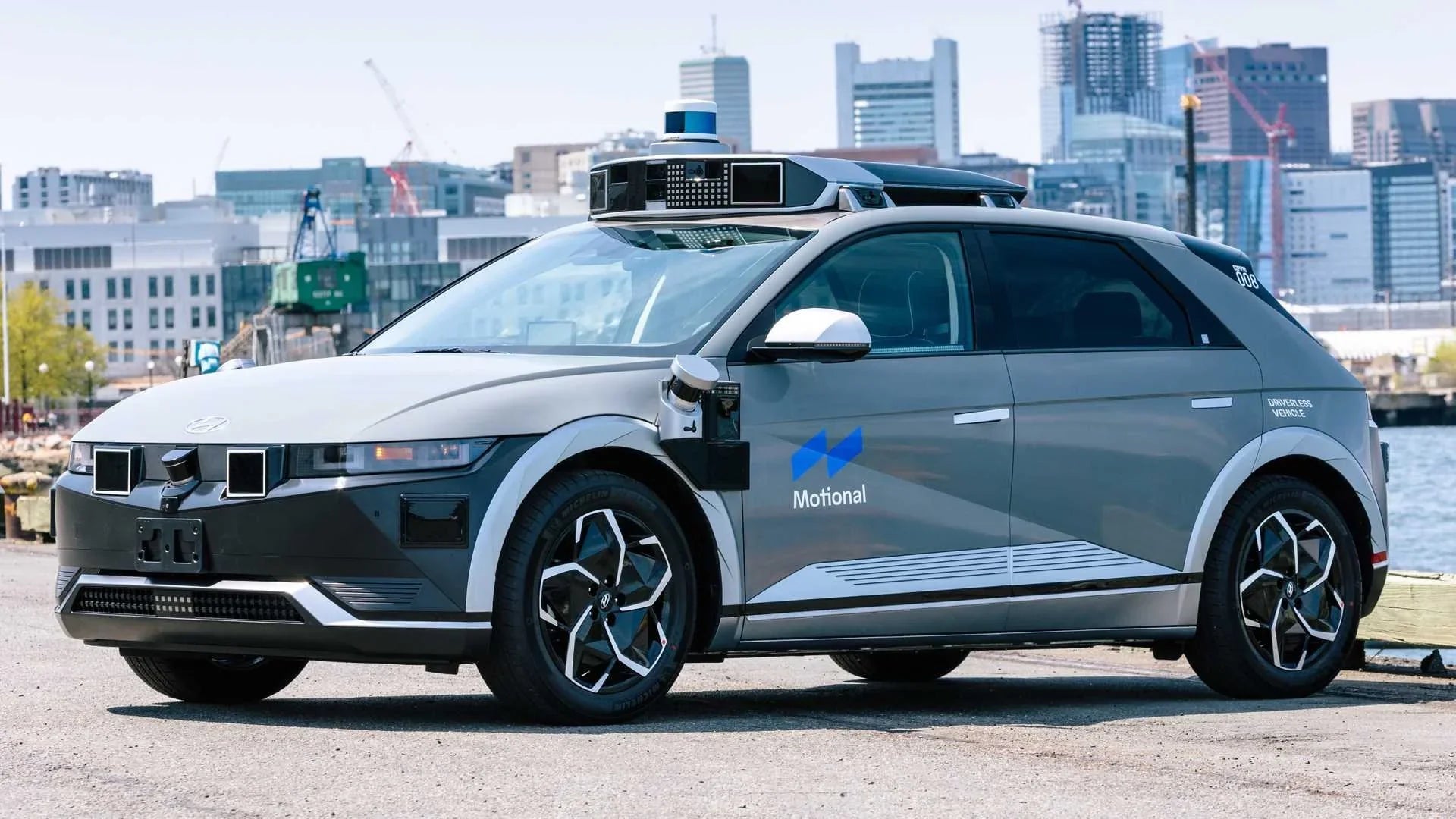
Recommend Reading: Hyundai’s Push Toward Advanced Self-Driving: What Comes Next for the Automaker

Hinterlassen Sie einen Kommentar

Bitte beachte, dass Kommentare vor der Veröffentlichung freigegeben werden müssen.

Diese Website ist durch hCaptcha geschützt und es gelten die allgemeinen Geschäftsbedingungen und Datenschutzbestimmungen von hCaptcha.

FAQs

Wie viele Kilometer kann ein Hyundai IONIQ 5 mit einer vollen Ladung fahren?

Der Hyundai IONIQ 5 kann in seiner RWD Long Range -Konfiguration mit dem 77,4-kWh-Akkupack mit einer vollen Ladung bis zu 303 Meilen weit fahren.

Welche Ausstattungsvariante des IONIQ 5 bietet die beste Reichweite?

Die Long Range-Version des IONIQ 5 SE RWD bietet die höchste von der EPA geschätzte Reichweite von 303 Meilen , während die AWD-Ausstattungen etwa 266–270 Meilen bieten.

Reduziert der Allradantrieb die Reichweite des IONIQ 5?

Ja. Die AWD-Ausstattung hat aufgrund des zusätzlichen Gewichts und der Doppelmotorlast eine etwas geringere Reichweite. Das AWD Limited- Modell bietet eine Reichweite von ca. 428 km pro Ladung.

Wie hoch ist die tatsächliche Reichweite des IONIQ 5 auf der Autobahn?

Bei 70–75 mph beträgt die tatsächliche Reichweite des IONIQ 5 je nach Temperatur, Gelände und Geschwindigkeitskonstanz typischerweise zwischen 240 und 270 Meilen .

Wie wirkt sich kaltes Wetter auf die Reichweite des IONIQ 5 aus?

In kalten Klimazonen kann die Reichweite aufgrund von Leistungsverlust der Batterie und erhöhtem Heizenergieverbrauch um 20 bis 30 % sinken. Das optionale Wärmepumpensystem trägt dazu bei, den Reichweitenverlust im Winter zu reduzieren.

Wie lange dauert es, einen Hyundai IONIQ 5 vollständig aufzuladen?

Mit einem Heimladegerät der Stufe 2 (240 V) dauert eine vollständige Aufladung etwa 6–8 Stunden . Mit einem ultraschnellen 800-V-Gleichstromladegerät kann der IONIQ 5 in nur 18 Minuten von 10 % auf 80 % aufgeladen werden.

Ist der IONIQ 5 gut für lange Autofahrten geeignet?

Ja. Mit einer Reichweite von bis zu 486 Kilometern und Zugang zu einer ultraschnellen Ladeinfrastruktur ist der IONIQ 5 ideal für Langstreckenreisen in Nordamerika.

Wie ist die Reichweite des IONIQ 5 im Vergleich zum Kia EV6?

Der Kia EV6 RWD übertrifft den IONIQ 5 dank besserer Aerodynamik um 8–16 Kilometer . Beide nutzen die gleiche E-GMP-Plattform und die gleichen Batteriesysteme.

Was beeinflusst die Reichweite des IONIQ 5 bei voller Ladung am meisten?

Zu den wichtigsten Faktoren zählen Fahrgeschwindigkeit, Klimabedingungen, Batterietemperatur, Reifendruck und Ladevolumen . Eine sanfte Fahrweise kann dazu beitragen, die Reichweite pro Ladung zu maximieren.

Verringert die Batterieverschlechterung mit der Zeit die Reichweite des IONIQ 5?

Ja. Mit der Zeit verschleißen alle Batterien von Elektrofahrzeugen. Die meisten IONIQ 5-Besitzer berichten von einem Reichweitenverlust von 5 bis 10 % nach 100.000 Meilen . Hyundai bietet eine 8-jährige bzw. 100.000-Meilen-Garantie auf die Batterie .

EV-Neuigkeiten

Alle anzeigen

New York Plans East Coast’s Largest Battery-Powered EV Charging Hub

New York Plans East Coast’s Largest Battery-Powered EV Charging Hub

XCharge and Energy Plus plan to launch a major battery-backed EV charging hub in Brooklyn with 44 high-power chargers. By storing electricity off-peak, the site aims to reduce grid strain, manage costs, and support urban EV growth.

Weiterlesen

Waymo Introduces the Ojai Robotaxi as Fleet Expansion Accelerates

Waymo Introduces the Ojai Robotaxi as Fleet Expansion Accelerates

Waymo introduced the Ojai, a Zeekr-built robotaxi designed to replace the aging Jaguar I-Pace. With improved sensors, faster charging, and cold-weather readiness, the Ojai supports Waymo’s rapid expansion into dozens of new cities.

Weiterlesen

Volvo EV Sales Show Sharp Regional Divide in 2025

Volvo EV Sales Show Sharp Regional Divide in 2025

Volvo ended 2025 with uneven EV results worldwide. U.S. electric sales nearly doubled, while Europe and China declined sharply. Upcoming models like the EX60 may prove crucial to restoring global growth.

Weiterlesen