



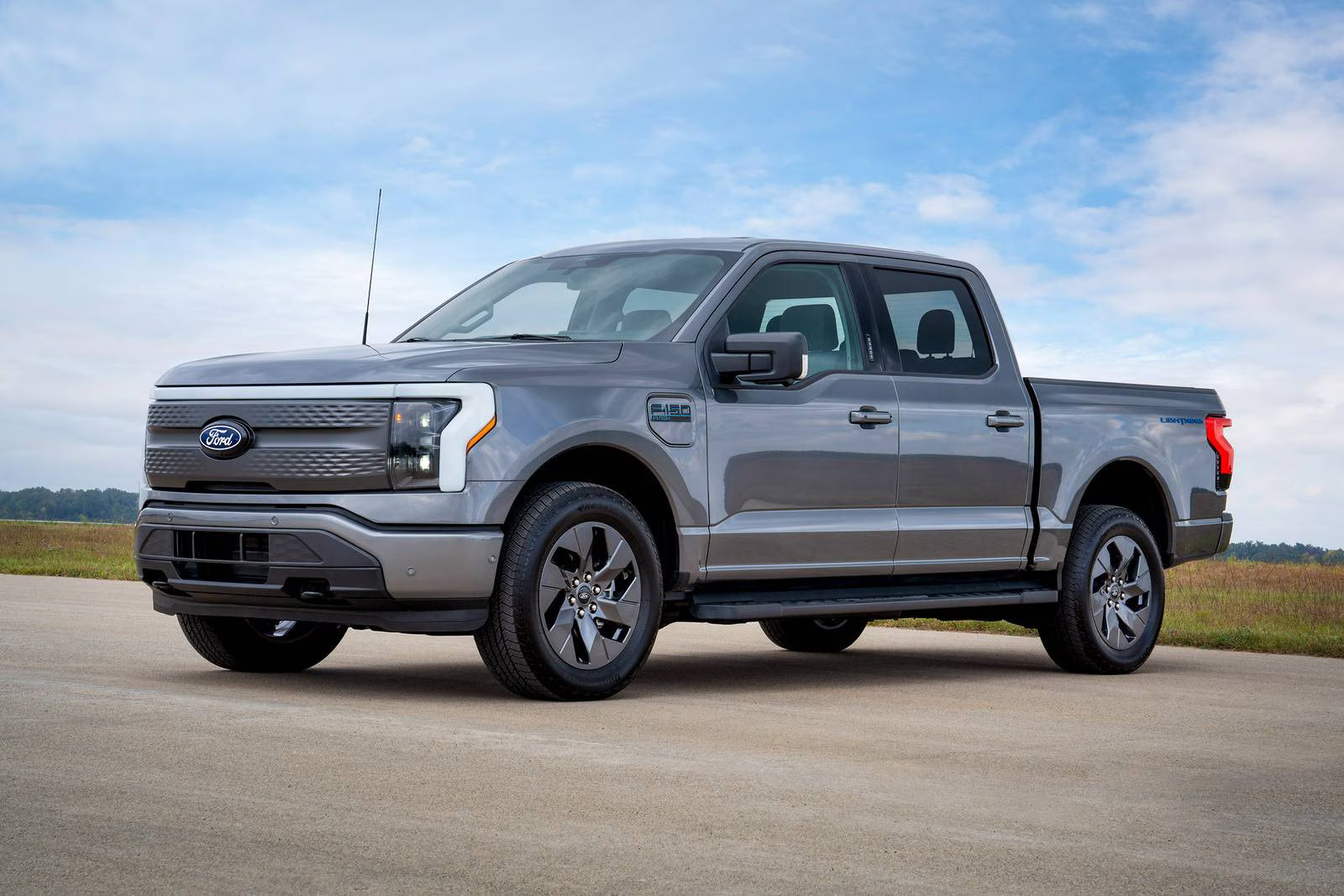
A Bold Launch Meets Harsh Market Reality
When Ford unveiled the F-150 Lightning, it symbolized the brand’s confidence in an all-electric future. The company projected up to 150,000 units sold per year, expecting EV demand to soar. Yet 2024 told a different story: only 33,000 Lightnings found buyers, and each likely sold at a loss.
Now, according to The Wall Street Journal, Ford executives are considering ending production of the electric truck altogether. While no official decision has been made, the possibility underscores how quickly optimism around EVs has cooled.

Falling Demand and Rising Costs
Ford’s EV momentum has slowed sharply. After federal tax incentives were scaled back, the company’s overall EV sales dropped 24% in October. Dealers also report declining interest. One told the WSJ bluntly: “No one wants to buy them.”
Despite this, Ford insists it hasn’t given up. “We have good inventories of the F-150 Lightning and will bring Rouge Electric Vehicle Center back up at the right time,” a company spokesperson said, adding that production remains paused due to supply issues and a recent factory fire.
The F-150 Lightning has long been viewed as a loss leader—a model meant to build credibility in the EV space, even at a financial cost. But with material prices rising and consumer interest waning, it’s becoming harder for Ford to justify the expense.
Policy Changes Shift the Equation
A few years ago, EVs were essential for automakers to meet federal fuel economy standards. Selling electric models helped balance out gas-powered vehicles in fleet averages.
But with the Trump administration loosening fuel rules and imposing new tariffs that increase manufacturing costs, Ford no longer faces the same regulatory pressure to sell EVs. That change, combined with shrinking demand, makes the Lightning’s future uncertain.
An Expensive Segment for Everyone
The Lightning isn’t alone in its struggle. Electric trucks from Chevrolet, Rivian, and Tesla face the same problem: offering long range, towing capacity, and performance at a price buyers are willing to pay.
As one analyst put it, “It’s nearly impossible to build a full-size electric truck that matches a gas model’s capability and still makes money.” Most buyers remain hesitant to pay the premium until battery technology becomes cheaper and charging infrastructure more reliable.
Still, Ford points out that the F-150 Lightning remains the best-selling electric pickup in the U.S., even as new competitors enter the market. It also delivered record quarterly sales earlier this year.
Ford’s Next Move: A Cheaper EV Strategy
Instead of doubling down on the Lightning, Ford appears to be shifting its focus toward a smaller, more affordable electric truck and a new “Universal EV Platform.”
CEO Jim Farley says the platform will dramatically simplify manufacturing—using fewer parts and a new assembly process—and help Ford compete with Chinese automakers that are rapidly expanding in both the U.S. and global markets.
This next-generation electric truck, expected to start around $30,000, won’t debut until 2027 at the earliest. That leaves Ford with a major question: what fills the gap until then?

The Road Ahead
Ford faces a dilemma shared by many traditional automakers: keep investing in money-losing EVs to gain long-term expertise, or pause and regroup until the market matures.
For now, the company says production of the F-150 Lightning will resume “at the right time.” But its uncertain future highlights a broader truth — the electric pickup revolution isn’t unfolding as fast, or as profitably, as Detroit once hoped.
Recommend Reading: Ford EV Charging Guide: Mustang Mach-E & F-150 Lightning

Partager:
2026 BMW i4 Delivers More Power, Extended Range, and Smarter Tech
Toyota’s Solid-State Battery Could Redefine the Future of EVs