





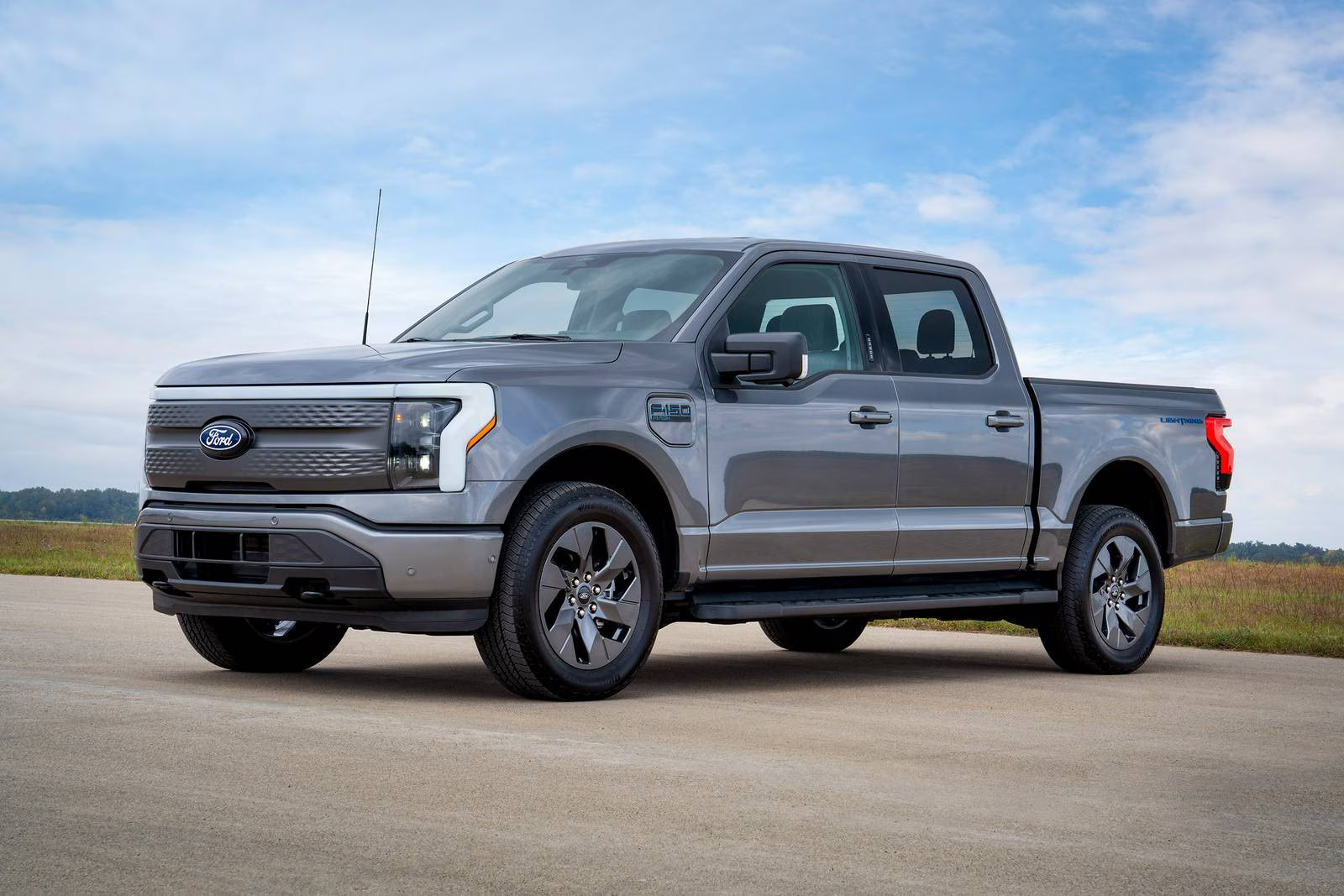
Ford Signals a Shift Toward Affordable EVs
Ford is preparing a new electric vehicle aimed at competing directly with mainstream models like the Tesla Model 3 and Model Y. The announcement came from CEO Jim Farley, who briefly discussed the project during a recent automotive podcast appearance.
This move reflects a broader recalibration within the EV sector. Following policy changes under the Trump administration, several automakers have faced mounting financial pressure, leading to scaled-back electrification plans and significant investment losses. Against this backdrop, Ford appears to be rethinking its strategy, placing greater emphasis on cost-effective electric vehicles rather than high-priced, niche offerings.

A New Direction After Program Cutbacks
Ford’s renewed focus on affordability comes after a series of cancellations and adjustments. The company previously halted production of the F-150 Lightning, which had been positioned as a leading electric pickup in the U.S. market but struggled to achieve sustained demand.
In addition, plans for a next-generation full-size electric truck and an updated electric Transit van were discontinued. These decisions indicate a shift away from ambitious, high-cost EV programs toward projects that can better align with market demand and profitability targets.
At the same time, Ford is expanding its hybrid lineup and exploring extended-range electric vehicles (EREVs), particularly for use cases such as towing, where traditional battery-electric systems still face limitations.
The Role of a New EV Platform
Central to Ford’s future plans is the development of a dedicated architecture known as the Universal Electric Vehicle (UEV) platform. This flexible foundation is designed to support multiple vehicle types while keeping production costs under control.
The first product built on this platform is expected to be a mid-size electric pickup priced at approximately $30,000, scheduled to debut next year. However, it is unlikely that Ford would invest heavily in a new platform for a single model.
Although Farley did not explicitly confirm details, the upcoming competitor to Tesla’s core models is widely expected to share this same architecture. The platform’s modular design allows for different body styles, suggesting that Ford could introduce multiple vehicles based on a common technical base.

Competing With Tesla’s Core Models
Ford’s planned EV is intended to rival Tesla’s most popular offerings in both price and practicality. Instead of targeting the premium segment, the company is focusing on delivering a vehicle that balances affordability with everyday usability.
Whether Ford will launch one or several models in this category remains unclear. However, the flexibility of the UEV platform suggests that both sedan-like and crossover-style vehicles could eventually be developed.
The goal appears to be positioning Ford within the same market space as Tesla’s high-volume models, which have set benchmarks for range, performance, and pricing in the electric vehicle sector.
Battery Strategy: Cost vs. Performance
A key factor in achieving lower prices will be Ford’s choice of battery technology. The company is expected to use lithium iron phosphate (LFP) batteries, the same chemistry planned for its upcoming electric pickup.
LFP cells are generally less expensive to produce and offer longer cycle life compared to nickel-based alternatives. They are also more tolerant of frequent full charging, which can be an advantage for daily use.
However, this approach comes with trade-offs. LFP batteries typically have lower energy density, which can limit driving range or require larger battery packs to achieve similar distances. Ford’s challenge will be balancing these factors to deliver a product that meets consumer expectations without significantly increasing costs.
Broader Industry Context
Ford’s strategy reflects a wider trend in the automotive industry. As demand growth slows and incentives decline, manufacturers are increasingly prioritizing affordability and scalability over rapid expansion.
The focus is shifting toward vehicles that can appeal to a broader audience, rather than relying on early adopters or premium buyers. This includes simplifying product lineups, reducing production complexity, and investing in platforms that can support multiple models efficiently.
In this environment, a competitively priced EV could play a crucial role in maintaining market share and attracting new customers.

What to Expect Next
While detailed specifications have not yet been released, Ford’s upcoming EV will likely emphasize practicality, competitive pricing, and reliable performance. The use of a shared platform and cost-effective battery technology suggests a focus on long-term scalability.
The timing of the launch and final pricing will be critical. If Ford can deliver a vehicle that meets expectations in terms of range, features, and cost, it could strengthen its position in the increasingly competitive EV market.
For now, the company’s direction is clear: future growth will depend less on high-end electric vehicles and more on models that can reach a wider group of buyers.
Recommend Reading: Ford CEO Reflects on Lessons From the F-150 Lightning Program










Share:
2027 Subaru Getaway EV Specs: Range, Power, and Features
Uber Expands EV Incentives to All U.S. Drivers