





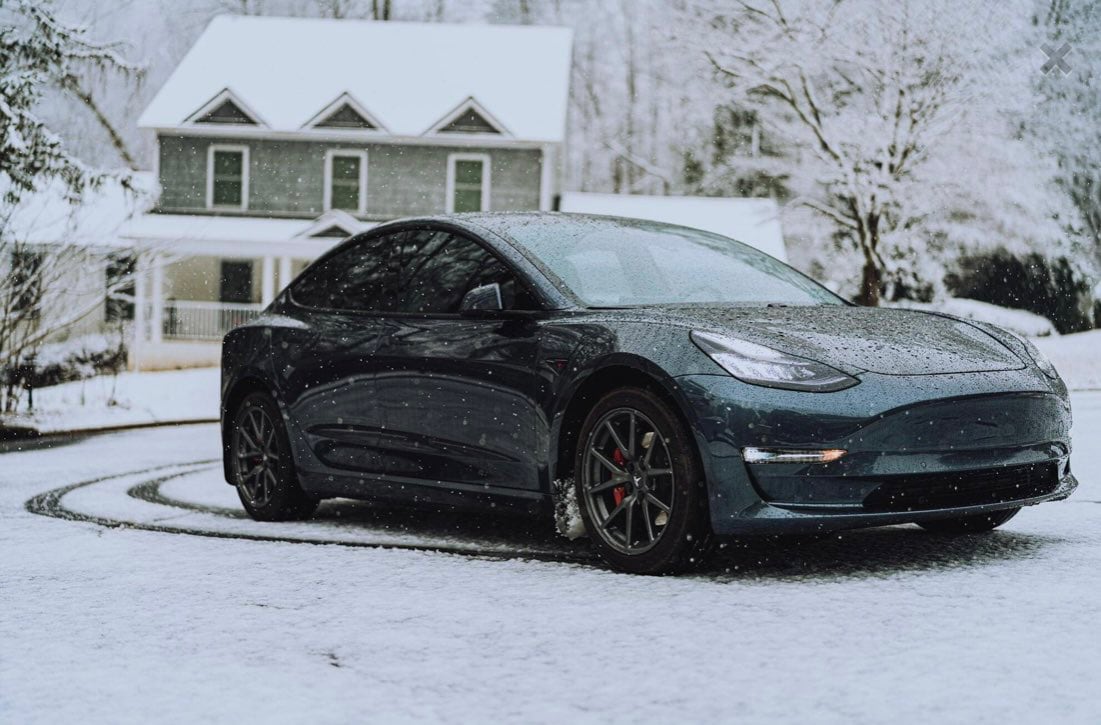
A Steep Decline in Early 2026 Electric Vehicle Registrations
The start of the year brought a significant downturn for the American electric vehicle market. According to registration data compiled by S&P Global Mobility, new EV registrations in the United States totaled 59,802 units in January, representing a 41% decline compared with the same month one year earlier.
Vehicle registration data is widely used as an indicator of sales activity, particularly because some manufacturers—such as Tesla—do not release detailed monthly U.S. delivery figures. Analysts therefore rely on registration records to track trends across the industry.
The numbers suggest a cooling market environment for electric cars at the beginning of the year, with demand weakening after a period of rapid growth in previous years.
EV Market Share Slips as Gas and Hybrid Models Gain Ground
In January, roughly 1.2 million new vehicles were registered across the U.S. market. Electric vehicles accounted for 5.1% of that total, a noticeable drop from 8.3% during the same month the previous year.
At the same time, vehicles powered by gasoline expanded their share of the market. Conventional internal-combustion models represented 76.6% of registrations, an increase of 2.3 percentage points compared with last year’s figures.
Hybrid vehicles also gained ground. Their share rose to 14.7%, reflecting a one-percentage-point increase.
These shifts highlight how quickly consumer preferences can change when economic incentives or policy conditions evolve.
The End of Federal Incentives Changed Buyer Behavior
A key factor behind the slowdown is the disappearance of the federal tax credit that previously helped offset the cost of electric vehicles.
Until September 30, 2025, buyers in the United States could receive up to $7,500 in federal incentives when purchasing qualifying EV models. Once that program ended, many shoppers faced higher upfront prices.
The removal of the credit had a direct impact on demand. Without the financial benefit, fewer buyers are willing to pay the premium often associated with electric vehicles.
At the same time, manufacturers are no longer under strong regulatory pressure to sell large numbers of EVs. With fewer policy-driven requirements, some automakers have chosen to reassess their electrification strategies.
Automakers Reconsider Electric Model Plans
The changing environment has already led several companies to cancel or delay electric vehicle projects.
For example, Ford ended production of the Ford F-150 Lightning, once the best-selling electric pickup in the United States.
Meanwhile, Tesla is preparing to discontinue the Tesla Model S and Tesla Model X during the second quarter of the year due to declining demand.
Other manufacturers have taken similar steps before vehicles even reached production. Honda and Ram both canceled major upcoming EV projects that had been expected to serve as flagship models.
These decisions reflect a broader recalibration across the automotive industry.

Some EV Brands Are Still Growing
Despite the overall downturn, not every manufacturer experienced declining registrations. A handful of brands recorded gains during the same period.
The luxury division of General Motors, Cadillac, reported an 8.1% increase in EV registrations.
Even stronger growth came from Toyota, which saw its EV registrations rise by 25% compared with the previous year.
The most dramatic improvement came from Lucid Motors, whose registrations surged 97% year over year, nearly doubling its presence in the market.
Other brands showed large percentage gains as well. Lexus reported a 166% increase, while Maserati recorded growth of 140%.
However, these percentages can be misleading due to relatively small sales volumes. Lexus, for instance, registered 810 EVs in January, while Maserati recorded just 12 vehicles.

Tesla Remains the Market Leader Despite Decline
Even with the downturn, Tesla continues to dominate the U.S. electric vehicle market.
In January, the company registered 32,123 vehicles, far more than any competitor. However, that figure still represented a 26% decrease compared with the same period last year.
Market analysts believe the slowdown is part of a broader adjustment period for the industry.
Tom Libby, an analyst at S&P Global Mobility, described the situation as a “reset,” suggesting that growth in the EV sector may become more gradual in the near future.
New Models Could Revitalize the Market
While some manufacturers are scaling back, others are preparing to launch new electric vehicles that could reshape the market.
California-based startup Rivian plans to introduce the Rivian R2 later this year, targeting a more affordable segment than its current models.
Meanwhile, Lucid Motors is expanding its lineup with upcoming crossover models known as Cosmos and Earth, which are intended to compete in the mid-size SUV category.
Traditional automakers are also entering this segment with new vehicles designed to emphasize fast charging and extended driving range. Examples include the BMW iX3, Volvo EX60, and Mercedes-Benz GLC Electric.
These models could help renew consumer interest if they deliver competitive performance and pricing.

Europe Moves in the Opposite Direction
While EV registrations declined sharply in the United States, Europe experienced the opposite trend.
During January, European markets recorded nearly 190,000 new electric vehicle registrations, representing a 13.9% increase compared with the previous year.
The region’s EV market share also climbed from 14.9% to 19.3%, indicating steady growth.
This divergence highlights how policy frameworks and incentives can strongly influence consumer behavior. European governments continue to promote electric vehicles through regulations and incentives, which may help sustain momentum.

A Market in Transition
The January figures suggest that the U.S. electric vehicle market is entering a transitional phase.
With federal incentives removed and regulatory pressures reduced, both automakers and consumers are adjusting their expectations. Some manufacturers are scaling back EV plans, while others are investing in new models that could reignite demand.
Whether the slowdown proves temporary or marks the beginning of a slower growth cycle will likely depend on pricing, technology improvements, and future policy decisions.
For now, the data shows that although the overall market contracted sharply, a handful of brands continue to expand—demonstrating that opportunities still exist within the evolving EV landscape.
Recommend Reading: Europe EV Sales Rise in January as U.S. Market Slows











Share:
How to Check Used EV Battery Health—and Why It’s Still Hard
Are Chinese Electric Pickups Really a Threat to Ford?